
Read Aloud

Have you ever reflected on the best part of your day?

Last week, I attended a four-day intensive workshop on Responsive Classroom. In one of the activities, we were asked to share the best part of our day. This was something I hadn’t thought of, in a long time.

At first, I thought that it would be hard to come up with one. I closed my eyes to recollect my day.

To my surprise, in a moment I knew that the best part of my day was fifteen minutes before my children slept.

Are you curious to know why?

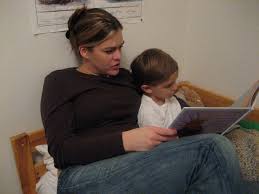
Fifteen minutes before my children sleep, I do a read-aloud with them.

In my previous posts, I have mentioned that my son is 14 and my daughter is 9. Our lives are busy with structured routines. There are many days when I meet them directly late in the evening. Earlier, we would just focus on completing our night routine of dinner, packing our bags and so on in order to go to bed on time. We would speak for a bit but at the back of my mind, I was worried about the time.

We, then, started with the routine of read-aloud before sleeping. Fifteen minutes of read-aloud turned out to be magical. It helps us to sit together calmly,  connect with each other and strengthen our bond. We discuss several personal and social issues, brainstorm solutions and learn new things that come up as a result of the story. It helps them to get in touch with their own feelings, emotions and gives them the courage to share them with me. They learn different ways of dealing with situations at hand. The last fifteen minutes what I call it ‘the most productive part’ of our 24 hours.

I select books that have limited content with lots of pictures. We stop after fifteen minutes even if the book is not over. I bring home 3-4 books and ask them to choose. We sometimes take turns to read. Children love choice and being in control, don’t they?

I always knew my daughter would take to stories naturally. I wasn’t sure how my son would respond. I was amazed to see that he looked forward to our time together.

As a teacher, I have always done read-aloud with my students, but I now extend the benefit to my children too.

Read-aloud is a proven and evidence-based technique to enable children to cope in times of stress or anxiety and as well as form a positive association with books. It stimulates language and helps them practice listening skills.

The greatest benefit that I have experienced is the positive, healthy time that my children and I spend together every night.

I would recommend every parent to develop this routine with their children and bring a happy, connected, positive and calm closure to a usually fast-paced day.
Low Stakes Writing, A MUST for children

How important is it for children to be able to write well?  

Am I talking about writing neatly?

No, I am talking about putting your thoughts down onto paper.

We accept that not every child desires to become a poet or an author. Nevertheless, every child must be confident enough to put his thoughts down well.

Writing is powerful, and the process of writing requires students to form and articulate their own thoughts, opinions, and arguments. Writing requires students to exhibit creativity and thoughtfulness,

Writing assignments cause anxiety for most students. Students have difficulty in writing their own personal statement. Who can express about himself better than himself? Yet, fear of judgment and the belief of not being good enough stops most from even trying.

And not to miss, writing assignments are definitely time-consuming too.

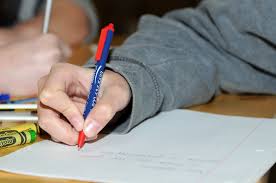
Low stakes writing is an important tool that builds confidence and interest in writing. Low stakes writing is a writing that is not graded and is usually half a page to one page. It should be a regular practice with children at home and in schools. Time should be set aside each day for the child to write what he is feeling, thinking, noticing or wondering. Setting aside ten minutes every day is sufficient. It is his time with his thoughts. Well, it could also be a poem that he wishes to compose or a story that he wishes to write. I would leave the child to make the choice. A child will write without inhibitions if he is not going to be judged. Low stakes writing is the beginning of good high stake writing.

Low stakes writing can be a powerful way for students to develop their metacognition

Metacognition is “cognition about cognition”, “thinking about thinking”, “knowing about knowing”, becoming “aware of one’s awareness” and higher-order thinking skills.

I would suggest that children should initially write on what they wish to. Gradually, we need to frame the thinking behind the writing to develop these skills. The next step could be asking the children to reflect on how their day has been, what they found challenging or what questions arose during an assignment/exam/project, how could they do better, what worked well for me or did not work well.

Low stakes writing is not just frivolous writing. It harnesses the Social-Emotional Learning.

As Cassel has defined, “Social and emotional learning (SEL) is the process through which children and adults understand and manage emotions, set and achieve positive goals, feel and show empathy for others, establish and maintain positive relationships, and make responsible decisions.”

Children can be asked to write about their noticing of the way society works. They could be asked to write about their beliefs about the environment or people. Children should be encouraged to write solutions to problems they notice in society.

Research has proved that children who can manage their thinking get higher grades and perform better in standardized tests. Children with strong social skills can maintain enduring friendships and relationships.

Low stakes writing requires and enhances critical and independent thinking in a non-judgemental and stress-free environment.

I have been using low stakes writing with my students. It also seems to be a stress buster for them along with all the other benefits. They call it free writing. Some children decide to be risk-takers and share what they have written. This activates the class and leads to a brainstorming discussion.

I aim to begin the same with my children at home. I hope to share the experience with my readers soon. Do let me know if you try out low stake writing with your students in school or children at home.

LOGICAL CONSEQUENCES-PART 2

Hi friends, I know it’s been a while since I have blogged. Excuse me for that as I have been too occupied at work as a member of the Individualized Support Team in a school that follows the International Baccalaureate Program. My last blog was about logical consequences. I promised that I would come out with logical consequences for the situations that you send me. I have received too many situations and I will answer the most general ones. If you missed my previous blog, you can click on the following link.

Let’s address the situations:

  1. The child makes promises to play the iPad for one hour but refuses to stop and we get into a fight.

Logical Consequence with the appropriate language:

“I understand that you enjoy playing the iPad. The expectation was to play for an hour. Since we found it difficult to follow the expectation. We need to make a choice between giving up the iPad for an x number of days or reducing the iPad time to half-hour.”

If the child still finds it difficult to follow the expectation, the child must be told that the privilege of playing with the iPad will have to be taken away until he shows that he is ready.

2. The child hits or verbally hurts another child.

Logical Consequence with the appropriate language:

You break it, you fix it.

The child needs to fix the problem by finding a strategy. He can apologize, make an apology card for the child, discuss with the friend. He needs to be told, “If you find it difficult to follow the expectation, the privilege of playing with friends will be take away until you believe that you are ready to play safely. Because, right now your friends do not feel safe with you around. So, you make a choice how would you like to fix this.”

3. The child talks disrespectfully.

Logical Consequence with the appropriate language:

“If we cannot say anything kind, then we must not say at all.”

The child must be told firmly that his words were unkind and disrespectful. He needs to decide if he would like to make a good choice by being careful of the words that he uses, or he would like to pull himself out until he is ready to be respectful. There could be a peace corner made in a house where the child is expected to take a break and reflect on his behavior.

The children must always receive a chance to correct their behavior before receiving a consequence. Children want to be trusted. They feel respected when given the responsibility of making good choices.

It is imperative that adults make the right choice of words when they speak to the children.

I reiterate consequences are not to punish or hurt the children but to give them an opportunity to learn.

An Experience In The Most Prestigious IB School Of Mumbai.

Are IB Schools the right choice for Indian students?

 Is IB style of education the right approach to educate children?

How different is International Baccalaureate from the Indian Board of Education?

These are the questions that always seeked answers in my mind as a teacher and as a mother of two children.

I was fortunate to get an opportunity to observe, interact and be a part of the inner circle of the most prestigious IB school of Mumbai. I spent a couple of hours in a classroom of grade 2 in the elementary section. I could learn about the functioning of the IB curriculum in a natural setting. The mission of the school came out exactly clear to me in those few hours.

The IB curriculum, being the most advanced in its approach, in fact, reminded me of the Ancient Indian System of Education. A school without walls. How true and good does that sound? That is exactly how this school was! A dream for children and I’d say teachers too.

The Ancient System of Education as we know stressed on value education and real life skills. This school too focused on self –discipline, cooperation, and collaboration, respect, sharing and putting the other person before you. It was a school with students from different nations and cultures. The teachers and the children respected each individual irrespective of the differences. The school planned activities for craft, creative writing, and unit of inquiry to be done in pairs in which one child would first assist the other to complete his work and vice versa. Thus, instilling values from a very young age. I was amazed to see the self discipline in the children. It almost looked magical to me. I believe this was possible due to the close contact between the teachers and the students as chalked out by the Vedic Education System.

They waited for their turn to answer and understood that it was disrespectful to cross talk when another child was answering. They stood in a queue at one instruction without having being reminded the second time. They spoke at a volume low enough not to disturb the others. They practised greeting each other in the activities chosen by them in the morning meetings. These little qualities make up our personality, don’t they?

The teachers never raised their voice or talked down at the children .Any correction needed in behaviour was politely brought to the notice of the child and the child was trusted by giving the responsibility of fixing the problem.

Every lesson had been allotted sufficient type to benefit all kinds of learners. They obviously did not believe in rote learning but learning the concept well enough to be able to apply in real life situations. Instead of going to the librarian, they scanned the barcode at the age of eight. Thus, learning life skills.

The program was structured and yet the children felt the freedom. They were free to choose their friends but encouraged to befriend everyone in a very subtle way. They were free to sit where and how they like and yet encouraged to follow basic guidelines. The expectations were clearly spelled out to the children and the children were happy to follow them and not have to be enforced upon them. A Culture of Mutual Respect!

I could see the future of humanity in these wise, little children. Education must aim at bringing out the best in an individual, not just academically but in every aspect. In this era of unrest, our world needs institutions that bring up children who are humane with the right values.

It is for you to decide what is important to you as a parent.

It is for you to decide what kind of education do you want to give your children.

We may not be able to send our children to an International school but let us make sure to practise and instil these values at home.

Logical Consequences

Have you heard of LOGICAL CONSEQUENCES?

Children often need external rewards to encourage positive behavior and consequences to discourage negative behavior.

It is only recently that I learned that consequences are different from punishment.

We punish a child when we take away his iPad or television time as a result of not finishing his meal. We punish a child when we do not allow him to play with his friends because he back-answered an adult. We punish a child when we give him a consequence that has nothing to do with his behavior. 

Well, unfortunately, that does not eradicate negative behavior. 

A child needs logical consequences. Consequences that are RELATED to the behavior of the child.

It is important that we give children a choice between getting a logical consequence or stopping their misbehavior. The consequence must be REASONABLE. It is also imperative that we talk to the child about his logical consequence in private and not in front of his siblings or peers, so we are RESPECTFUL to the child. The language used to speak to the child should not disrespectful or humiliating. We must talk to the child and not at the child.

A logical consequence is not an angry response to a behavior. It is a responsible action to help rather than hurt. We as parents or teachers need to ask ourselves the purpose of the consequence. Is it hurt or punish the child or to help him correct and learn the appropriate behavior. A consequence must be HELPFUL.

Children must know that all we have privileges and they will be taken away if we do not value or respect them. Before we do that, we must give them a choice of correcting his behavior. Trust that he can decide well.

U tell the child:

You break it. You fix it.

                      Take a break

                      You lose a previlege.

Do you need situations to understand better?  Send me situations that you have come across with your children or students. We will come up with logical consequences for each situation.

Responsive Attitude

How do we bring responsive children from our IB schools into our homes?

I am a fortunate mother of two children 9 and 13, and a learning support associate at the most prestigious international school of Mumbai which follows the International Baccalaureate from pre k.

I have been attempting to bring the responsive classroom approach to my home and it is has made a huge difference in the way my children and I interact and do our tasks.

First comes first, Responsive Classroom is an attitude. An attitude of respecting the children, believing that they can be responsible for their actions and capable of fixing their problems and irresponsible behaviors. So, I would call it Responsive Attitude since we are now talking of our homes.

Let us look at the shift in the language that we must make as parents to reinforce, remind and redirect.

Let us look at reminding language in this post.

Reminding Language:

  1. It is essential that we remind children that they must be focusing on what they are doing and not on what or how his friend or sibling is doing. Instead of having an argument over what the other does or does not, we need to remind the children that we need to be concerned about our actions.

The appropriate language would be, ‘ What do YOU need to be doing right now ??’ It is important to bring the focus back to our child.

2. There are times we want our children to be ready at a particular time. Instead of constantly saying, ’Be ready by 5 pm/ You are already late./ You need to hurry up.

It is important that we put the responsibility on the child to figure out a way to be ready on time.

Appropriate language: What will you need to do so you can be ready for ……. quickly

3. Teaching our children to make everyone a part of the group and not encourage groupism is very essential. Children do not want to be preached or lectured, because it makes them feel incompetent.

Appropriate Language: How can we make sure everyone feels included? In another situation…What can we do when we are sharing a secret with our friend but do not want another friend to hear it without being impolite?

4. Children at times find it easier to express themselves with actions instead of words. They may feel aggressive and hit, kick, pinch or bite. As mothers, we immediately want to resort to a lecture or a punishment.

We must have a conversation with the child and let him know that the child being hurt and the others around do not feel safe in his presence.Hence, he may have to remove himself from the group until he behaves in a way that others feel safe.  The child surely does not want to be left out.

Appropriate language: What can you do to make __________ feel safe and friendly?

The Responsive Approach puts the responsibility on the child to fix a problem or come out with a solution.

Children should be asked questions such as

What can you do if….?

Show me how…….

How do we plan to take care of….?

How will you….?

Remind me …….

How might we follow our home rules…..?

The child feels trusted and respected when we keep our volume low, respect them and show faith in him to fix a situation even though he might have gone wrong earlier.

If there any more situations in which you would like to know how to use ‘The Responsive Attitude’, do write to me

An Experience in the Most Prestigious IB School of Mumbai.

Are IB Schools the right choice for Indian students?

 Is IB style of education the right approach to educate children?

How different is International Baccalaureate from the Indian Board of Education?

These are the questions that always seeked answers in my mind as a teacher and as a mother of two children.

I was fortunate to get an opportunity to observe, interact and be a part of the inner circle of the most prestigious IB school of Mumbai. I spent a couple of hours in a classroom of grade 2 in the elementary section. I could learn about the functioning of the IB curriculum in a natural setting. The mission of the school came out exactly clear to me in those few hours.

The IB curriculum, being the most advanced in its approach, in fact, reminded me of the Ancient Indian System of Education. A school without walls. How true and good does that sound? That is exactly how this school was! A dream for children and I’d say teachers too.

The Ancient System of Education as we know stressed on value education and real life skills. This school too focused on self –discipline, cooperation, and collaboration, respect, sharing and putting the other person before you. It was a school with students from different nations and cultures. The teachers and the children respected each individual irrespective of the differences. The school planned activities for craft, creative writing, and unit of inquiry to be done in pairs in which one child would first assist the other to complete his work and vice versa. Thus, instilling values from a very young age. I was amazed to see the self discipline in the children. It almost looked magical to me. I believe this was possible due to the close contact between the teachers and the students as chalked out by the Vedic Education System.

They waited for their turn to answer and understood that it was disrespectful to cross talk when another child was answering. They stood in a queue at one instruction without having being reminded the second time. They spoke at a volume low enough not to disturb the others. They practised greeting each other in the activities chosen by them in the morning meetings. These little qualities make up our personality, don’t they?

The teachers never raised their voice or talked down at the children .Any correction needed in behaviour was politely brought to the notice of the child and the child was trusted by giving the responsibility of fixing the problem.

Every lesson had been allotted sufficient type to benefit all kinds of learners. They obviously did not believe in rote learning but learning the concept well enough to be able to apply in real life situations. Instead of going to the librarian, they scanned the barcode at the age of eight. Thus, learning life skills.

The program was structured and yet the children felt the freedom. They were free to choose their friends but encouraged to befriend everyone in a very subtle way. They were free to sit where and how they like and yet encouraged to follow basic guidelines. The expectations were clearly spelled out to the children and the children were happy to follow them and not have to be enforced upon them. A Culture of Mutual Respect!

I could see the future of humanity in these wise, little children. Education must aim at bringing out the best in an individual, not just academically but in every aspect. In this era of unrest, our world needs institutions that bring up children who are humane with the right values.

It is for you to decide what is important to you as a parent.

It is for you to decide what kind of education do you want to give your children.

We may not be able to send our children to an International school but let us make sure to practise and instil these values at home.

#education #schooling # teaching #learning #educator #internationalschool

Error Correction

Error correction is a very important part of the learning process as it is rightly said,

“ We learn from our mistakes.”  Teachers may use any form of error correction but it is vital that the experience of correction is a positive experience as it can be very de-motivating for the learner.

The best form of error correction is Self Correction. There are several occasions when students make errors because they were in a hurry or less attentive or distracted. They may know the content but make errors due to external factors. It is essential that young learners are trained to correct their work by themselves. They should be given time post the assignment to read or reflect and correct any errors. The teacher could prompt to help the students to find the errors. The teacher and the learners could formulate certain signals for specific errors. For eg. Point your thumb behind for past tense, forward for future tense. This will make the correction exercise fun and less stressful. 

While the assignment is going on , the teacher must make notes of the mistakes that the children are making. She will then be in a position to address to the class.  

Self correction to a large extent reduces the pressure on the children to be corrected.

It also reduces the disagreement which is bound to rise.

It enables the teacher to focus on the key errors without having the child to face any kind of embarrassment or worry.

Correction becomes fun if the teachers and students come out with innovative ideas of self correction like formulating signals , symbols and  indicators.

The learners are trained to identify the errors in their work and rectify them.

It helps to boost the self confidence of the learners.

Self Correction must be the first tool used in assisting students to identify and rectify their own mistakes. It could be followed by peer correction and teacher correction.

                                                                                            Mamta Motwani

#education #teaching #training #students #learning #errorcorrection #schooling #lifelonglearning #teacher

My Recent Online Learning Experience

Language is learnt informally everyday by listening and speaking .I have had various opportunities to learn language formally. Each experience brought with it several benefits. Learning, I believe , has always been effective for me because an individual who is self driven will always know how to extract the benefits and use every experience as an opportunity .

   I would like to write about the most recent experience of learning language formally .I did an online course of Exploring English conducted by Future Learn, British Council. This was my first attempt to do an online asynchronous course. It was done at my convenience with no pressure. The tutors were well educated, informed and trained to teach English online. It helped me connect to learners from all over the world .There was active interaction between the tutors and the learners. The course was well graded and systematically presented. It catered to learners of different learning styles. I could improve my pronunciation by watching and listening to native English speakers as our tutors. The course polished not only speaking skills but listening, reading and writing.  I not only practised the four aspects of language but also learnt several grammar topics in detail. I had to appear for a quiz after each topic to know how well I have understood it. There was a panel for open discussion with millions of participants from around the world.

The course content was available even after passing the stages .I would go to and fro with the content to grasp it well. The tutors would reply to any doubt or query that I had.

   The course was extremely user friendly and was able to remove my fear and inhibitions of studying online. I received a certificate from Future learn for my performance which I treasure. I was able to apply the topics learnt in the language classes that I conduct.

I am thrilled to say that I am now doing another online course of International Diploma of Teaching and Training , specialing In TESOL from The Asian College Of Teachers. 

Mamta Motwani

#blogging #blog #education #learning #lifelonglearning

Humanistic Education

I take immense pleasure to say that I am a part of the Bharat Soka Gakkai Education Department which had its inaugural meeting on 20th October 2018. A landmark in the history of Mumbai.
Soka Education is humanistic education at its core. Its utmost priority is the happiness of children. It exists for the well-being of children.
Soka Education is not a mere injection of knowledge. It differentiates knowledge from wisdom. It works to make a child bloom to the fullest, not by just mere words or written mottoes.
Soka literally means ‘ to create value ‘ and that is what Soka Education does.
Soka (value-creating) education is an educational theory propounded by the Japanese educator Tsunesaburo Makiguchi. On November 18, 1930, Toda published the first volume of Makiguchi’s Soka kyoikugaku taikei (The System of Value-Creating Pedagogy), a summation of more than 40 years of classroom experience.
Today, Soka education is being practiced globally: in Japan in the Soka education system encompassing kindergarten through university, as well as at the Soka University of America in California and Soka Kindergartens in Brazil, Hong Kong, Malaysia, Singapore, and South Korea, as well as other parts of the world.
What is Soka Education? What are the Soka values? How is it different from our present education system? How different are the Soka teachers? Let us know more about this humanistic education in my next piece of writing.

education #teaching #blog #schooling #training