AI Curriculum Developer Learning Experience Designer
Learning designed for an AI-powered world.
I design and build digital learning experiences that combine curriculum expertise, learning science, AI and interactive technology — for education and the workplace.
- Curriculum Architecture
- AI Learning
- Interactive Experiences
- Assessment
- Professional Learning
Evidence
Selected work
Learning products already running on the web, each with the reasoning behind it written down. Two of them you can open right now without a code.
Already live
Practitioner framework separate site
The Learning Conditions
For Educators, school leaders and parents
A practitioner framework, published as a live site. It is the design position underneath the rest of the work on this site, and it stands on its own at its own address.
Adult LearningThe four conditions
- A child can be wrong at no cost
- A child holds decisions that are genuinely hers
- The adult knows what to say next
- A child can start without an adult
Education work
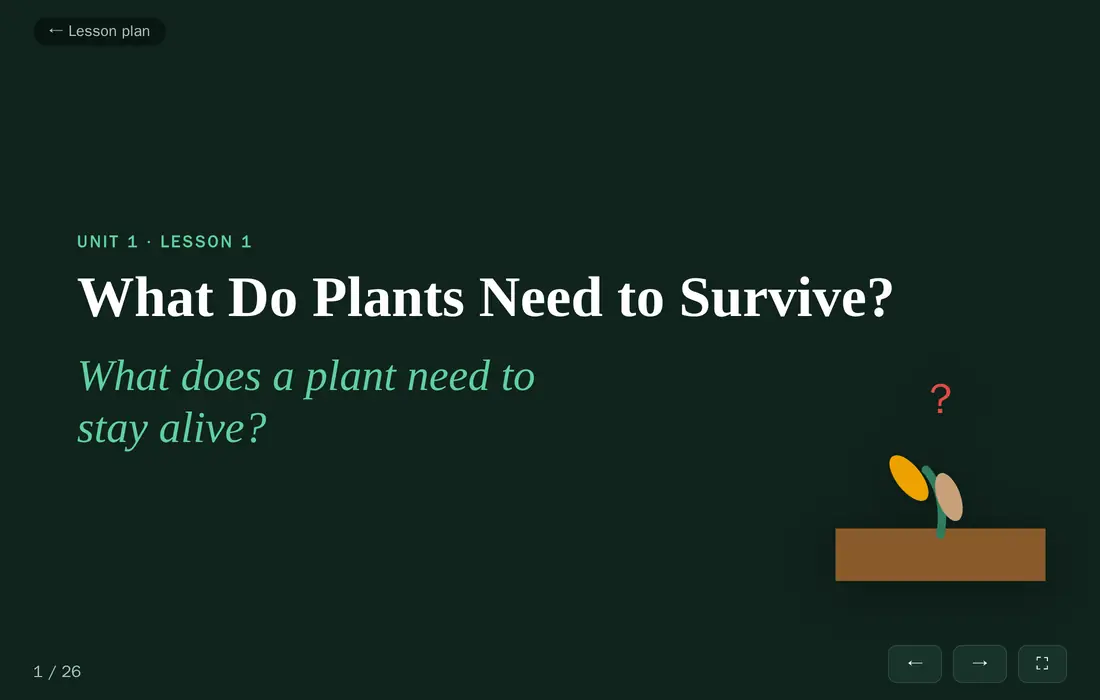
Grade 3 Science Programme
For Grade 3 teachers
Sixteen assessments across four units, each released when a learner finishes the lesson before it rather than on a fixed date, with three-level exemplars throughout.
Curriculum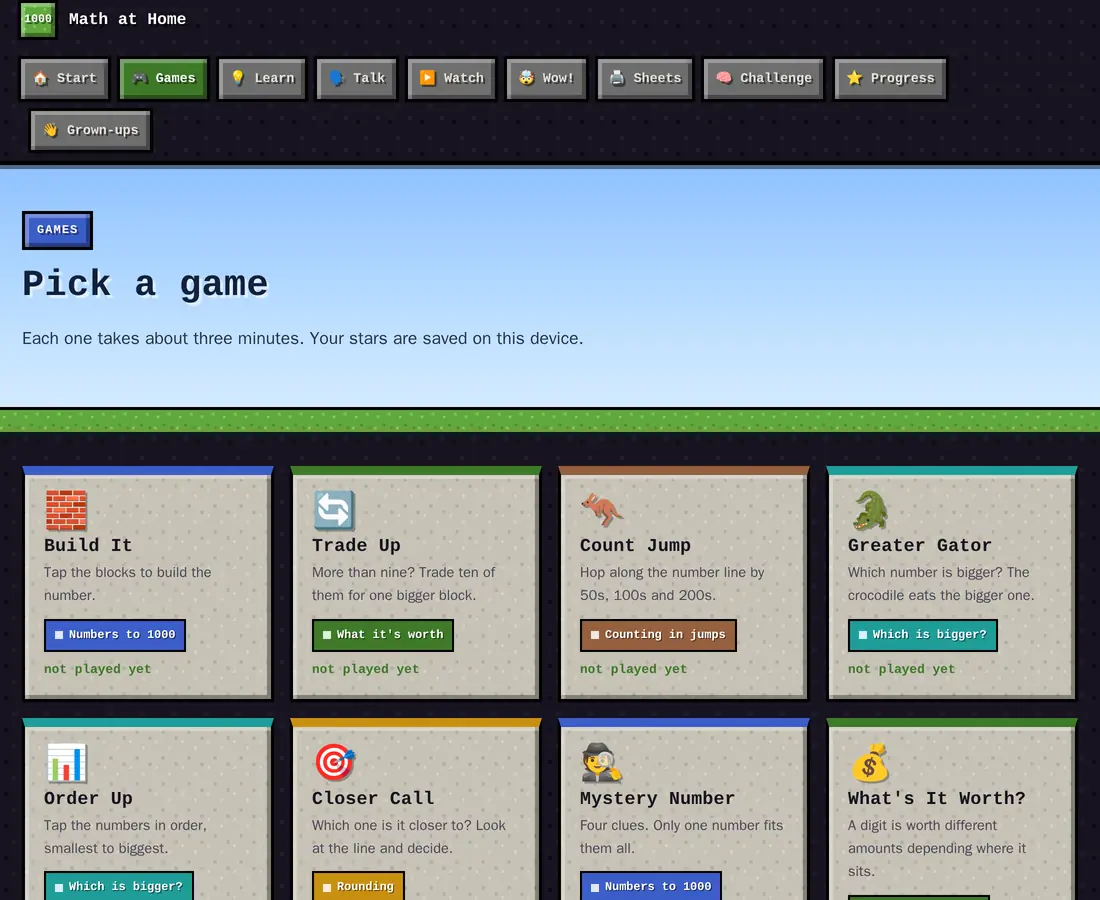
Education work
Math at Home
For Parents and carers, and the children they sit with
Procedurally generated practice, games that take about three minutes, and a Check instrument deliberately built with no score and one attempt — reporting to the adult rather than ranking the child.
Interactive Learning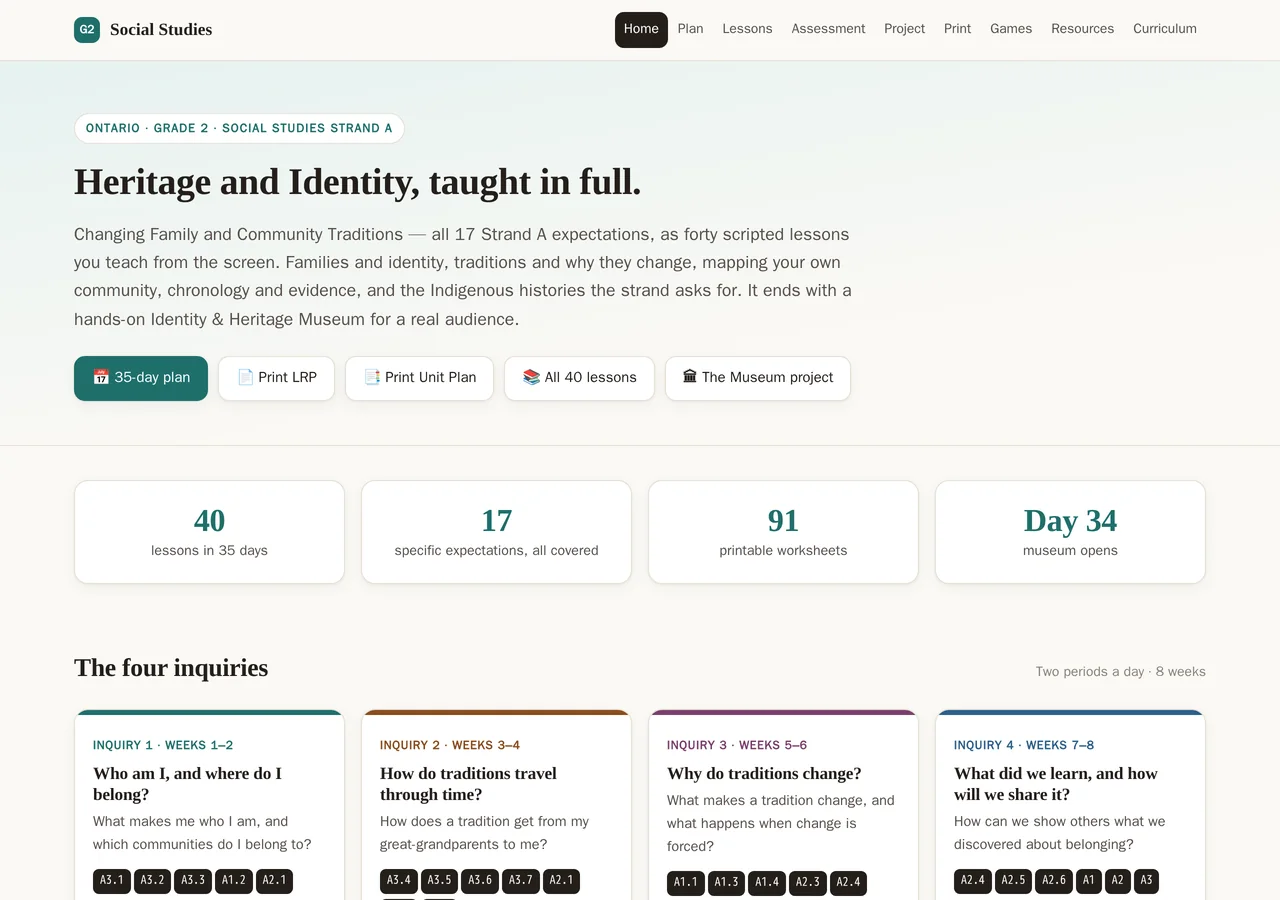
Education work
Heritage and Identity
For Grade 2 teachers and their classes
Forty minute-scripted lessons ending in a nine-lesson Museum project, curated from artefacts the children make earlier in the unit.
Curriculum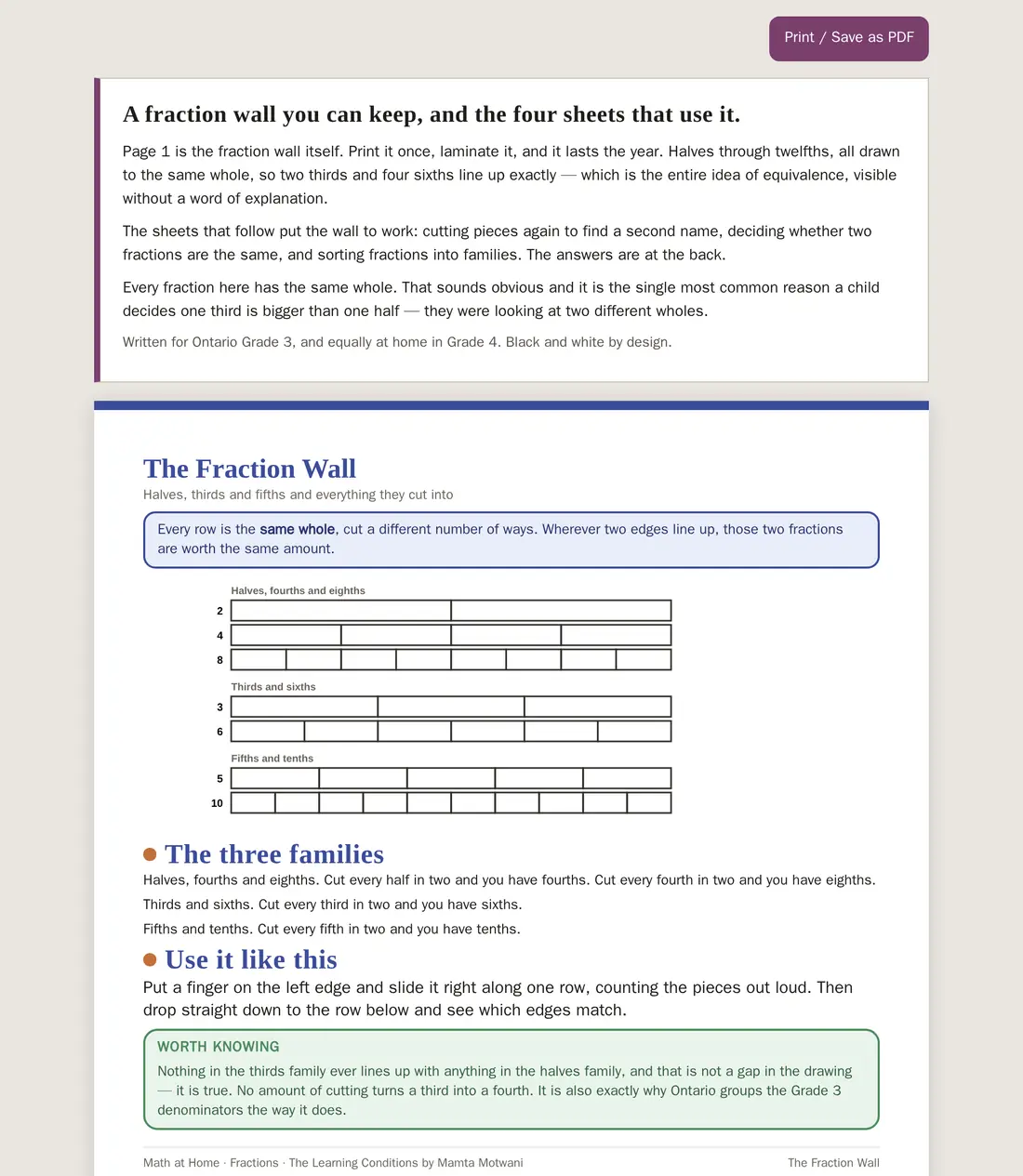
Education work
Classroom Tools
For Teachers who need something usable in ten minutes
Each is one page that does one thing and explains itself: a fraction wall drawn to a single whole so equivalence is visible without a word, area and perimeter, telling time, the equals sign, graphing, patterns, and challenge tasks.
Adult Learning
See all work, with case studies
In development
The AI Learning Lab
Four interactive learning experiences that teach people to use AI well, and where not to — for staff who do not work in technology, and for teachers. They are built and being tested, and they are not published yet because they are not finished to the standard the rest of this site is held to.
Capabilities
What I design
Four areas of practice. They overlap in almost every project.
AI Learning Experiences
Interactive learning that helps people understand, practise and apply AI.
In practice
Four products in development — a decision activity, a prompt practice tool, a workflow builder and a course for educators — each built so the learner has to make the call rather than watch one being made.Curriculum & Learning Architecture
Structured learning pathways connecting goals, content, practice and assessment.
In practice
A Grade 3 science programme of 50 lessons across four units, where each of its 16 assessments is released by the learner finishing the lesson before it rather than by a date.Interactive Digital Learning
Web-based learning environments, simulations, activities, assessments and tools.
In practice
120 browser games and 686 printable sheets across 24 hosted products, served with no accounts, no logins and no personal data stored.Professional Learning
Practical learning experiences for educators and professionals.
In practice
Sessions and self-paced modules written so that a participant leaves with something they can use the same week, not a certificate.
Process
From learning problem to working product
The same seven stages whether the product is a printed unit or an interactive web tool.
Discover
Ask who this is for and what already exists.
Define
Name the learning problem and what success looks like.
Architect
Map goals, sequence, practice and assessment.
Design
Decide what the learner sees, does and gets back.
Build
Make the working product, not a slide about it.
Validate
Test it. Check every claim it makes.
Iterate
Fix what the checks and the users find.
AI accelerates my research, prototyping and development. It does not replace learning design, verification or professional judgment.
Where this comes from
Deep roots in education. Broader possibilities for learning.
My foundation in curriculum and education shapes how I think about progression, clarity, feedback, engagement and learner independence. I now combine that expertise with AI-assisted development to create digital learning products for students, educators and professional learners.
What I hold on to
- Progression
- What has to be understood before the next thing can be.
- Clarity
- One idea per screen, named in words the learner already has.
- Feedback
- Specific enough to act on, and given while it still matters.
- Independence
- The product should make itself unnecessary.
The position underneath all of it is set out in The Learning Conditions, a separate published site. I design to the same four conditions whether the learner is seven years old or sitting in a workplace module.
Let’s build better learning.
If you are working on curriculum, AI learning, professional learning or a digital learning product, tell me what you are trying to make possible.