Grade 3 Science Programme
Four units with assessment triggered by progress, not by the calendar
- Units
- 4
- Pages
- 366
- Lessons
- 50
- Slides
- 50
- Assessments
- 16, progress-triggered
- Unit 1
- Free and open
What this case study claims
Design decisions, intended behaviour and the reasoning behind them, plus counts verified against the built product. It does not claim learner outcomes, adoption or improvement: those have not been measured, and describing an intention as a result would be the easiest thing on this page to get wrong.
Overview
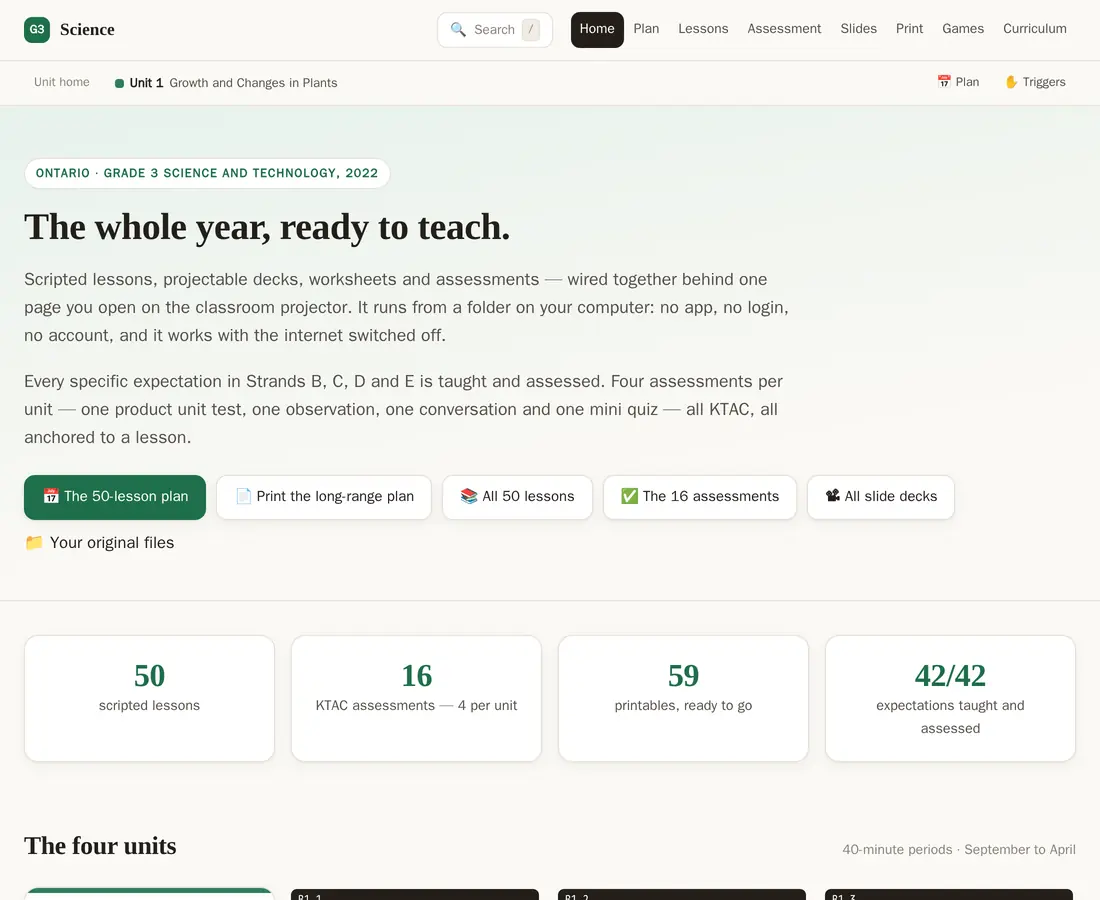
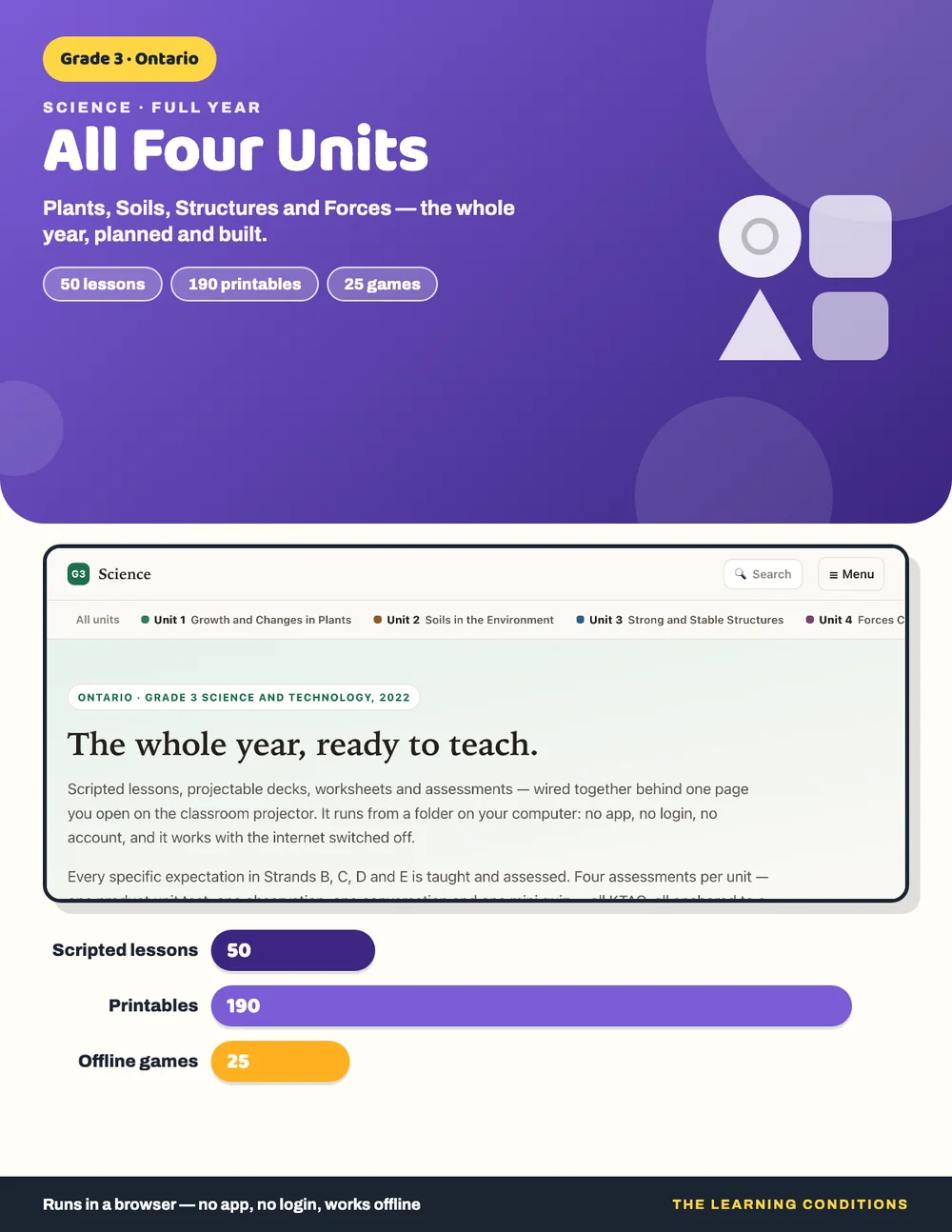
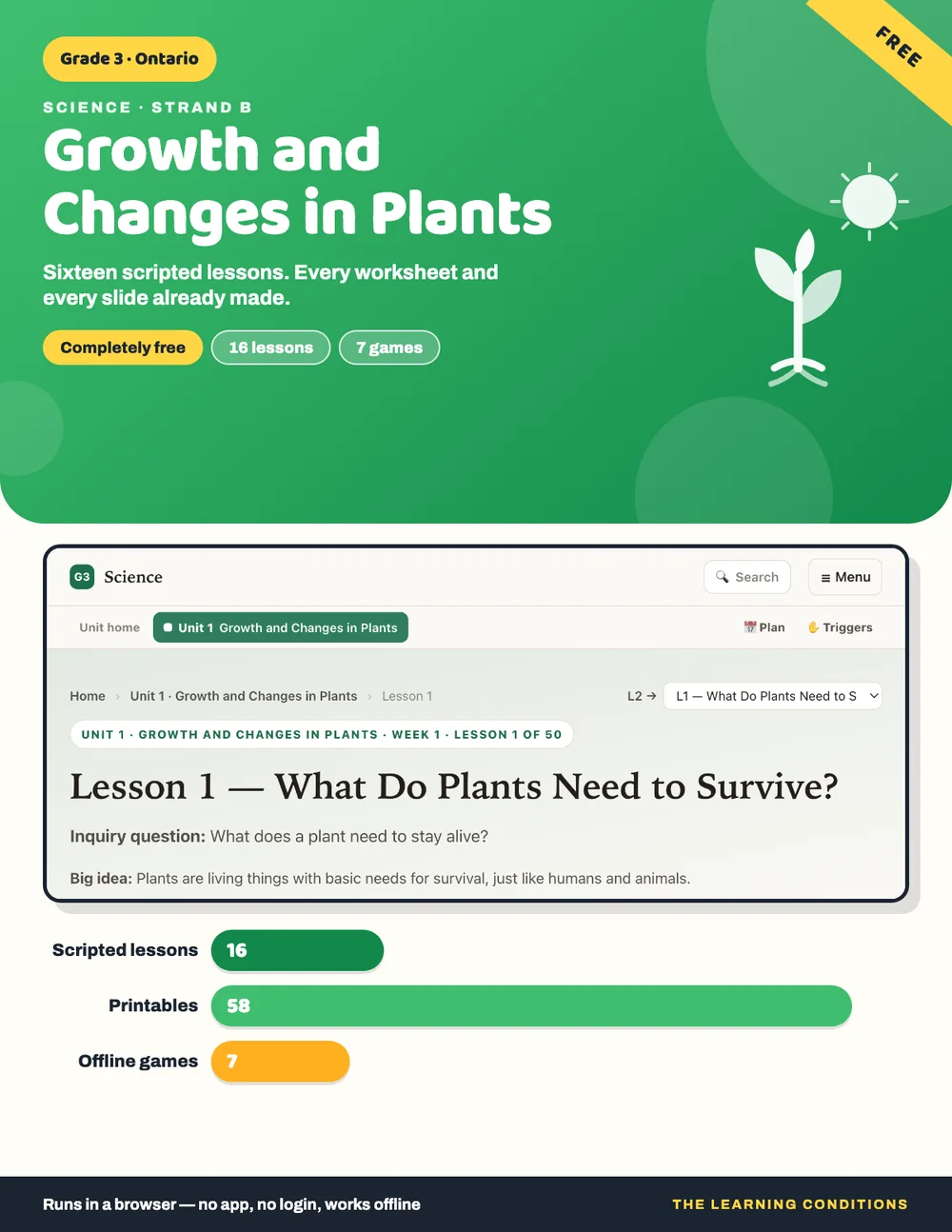
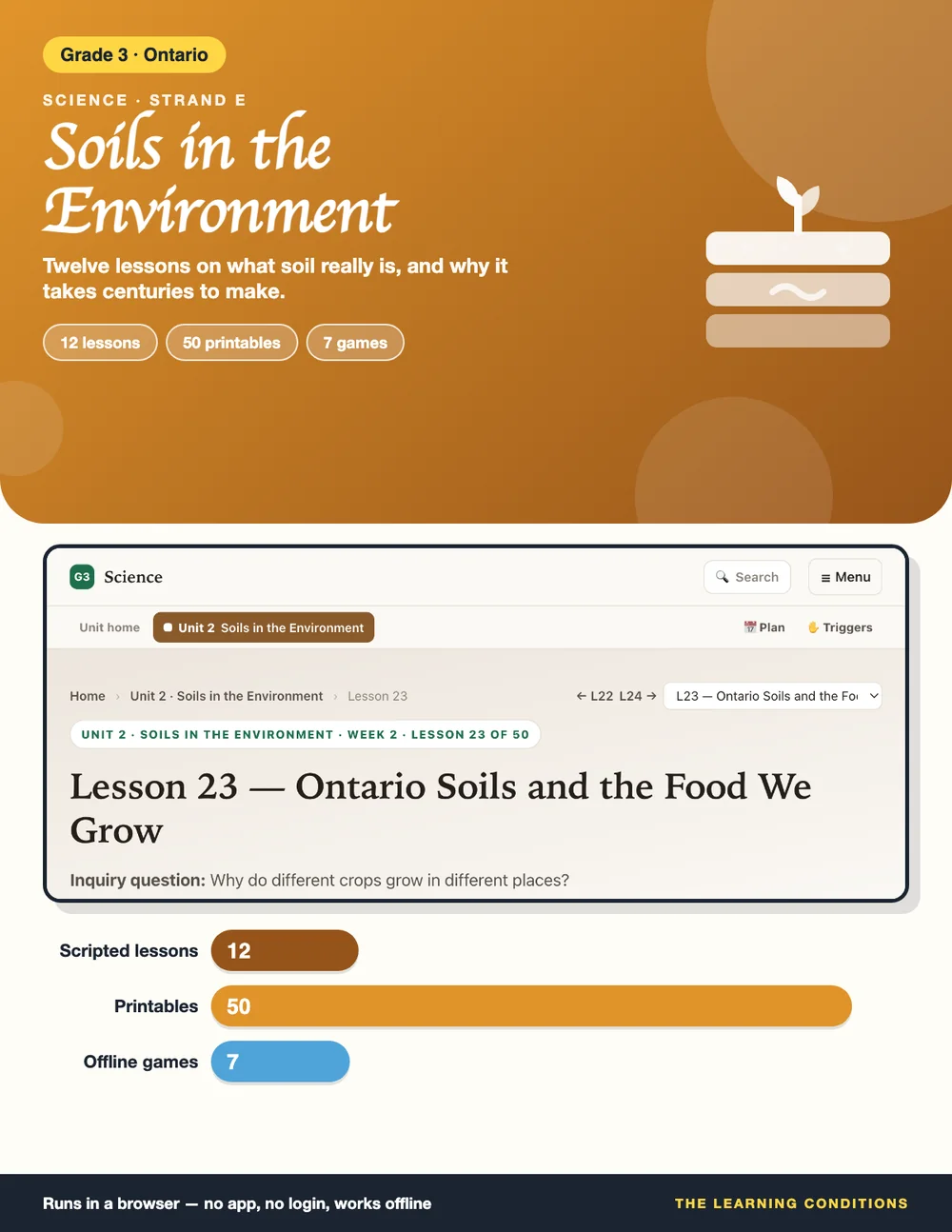
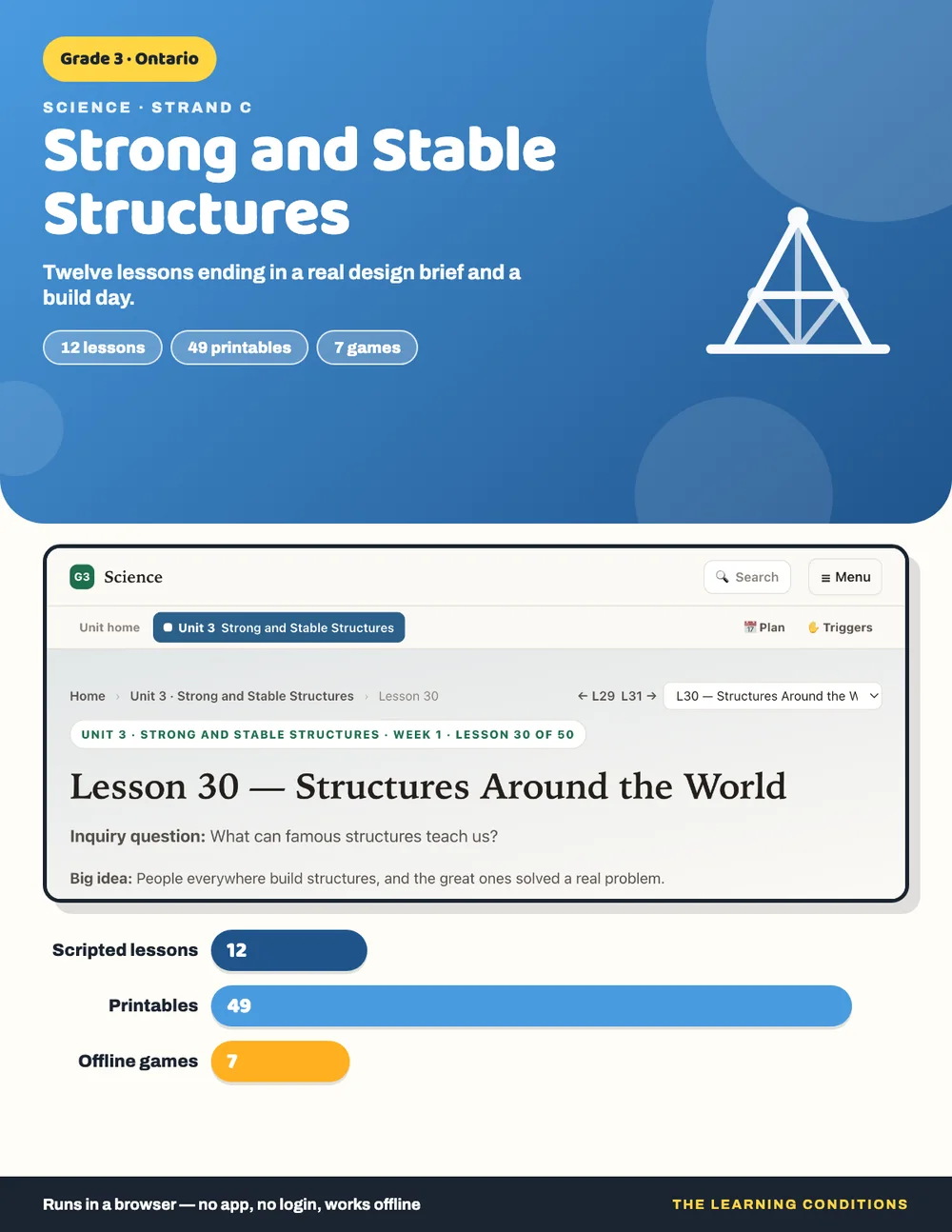
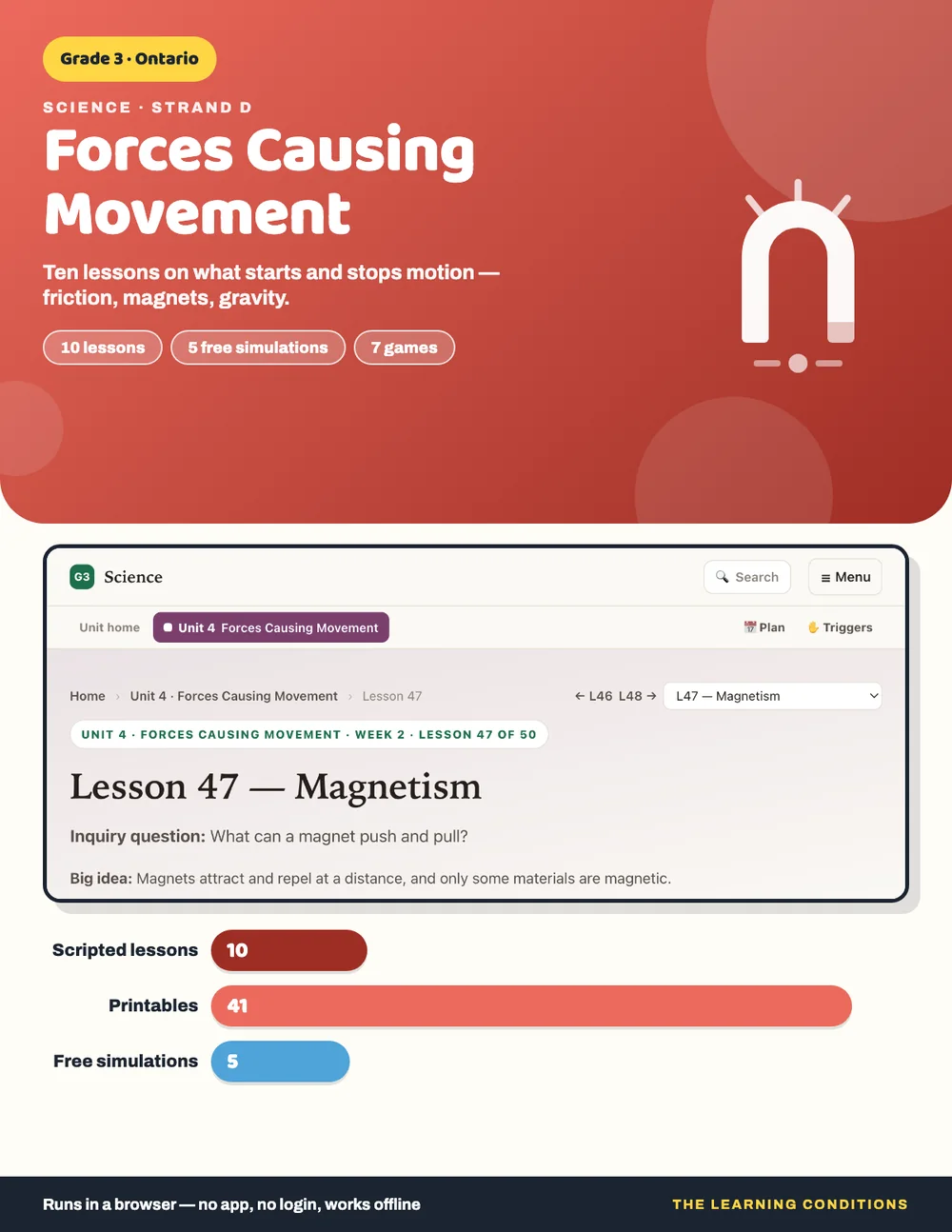
A four-unit Grade 3 science programme covering all four Ontario strands, built as 366 pages: 50 scripted lessons, 50 visual decks, 190 printables, 32 games and 16 assessments. The assessments are the point. There are four per unit — one product, one observation, one conversation, one quiz — each anchored to the completion of a specific lesson rather than to a date, each with exemplars at three levels, and each labelled as assessment for, as or of learning so its purpose is stated rather than assumed. Unit 1, Growth and Changes in Plants, is 107 pages and is free and open.
Problem
Published programmes schedule assessment by date. School calendars do not hold — a snow day, an assembly or a week lost to something else moves everything — and once the dates slip, teachers abandon the assessment plan rather than reschedule it. A second cost is less visible. Published programmes rarely state what a teacher should not mark, so every piece of student work becomes potential evidence and marking expands to fill the term. The programme needed an assessment schedule driven by learner progress rather than by dates, and an explicit list of what is collected and what is not.
Audience
Grade 3 classroom teachers, who are typically teaching all four science strands alongside every other subject, and who are accountable for assessment evidence they have to be able to defend.
My role
- Assessment system design — the frame, the 16 instruments, the trigger model and the exemplars
- Curriculum mapping, including the coverage audit and the out-of-scope declaration
- Lesson writing across all four units
- Specifying how the material is produced, so lessons, decks and diagrams stay in step across four units
- Visual design of the slides, the printables and the site
Goals
What the design set out to achieve. These are objectives, not results.
- Design assessment as one system on a shared frame, not as sixteen unrelated tests
- Make the assessment plan survive a lost week without being rescheduled by hand
- Show what earns each level, in a child’s register, rather than describing it in a rubric
- Tell the teacher explicitly what to collect and not mark
- State plainly what the programme does not cover
How it works
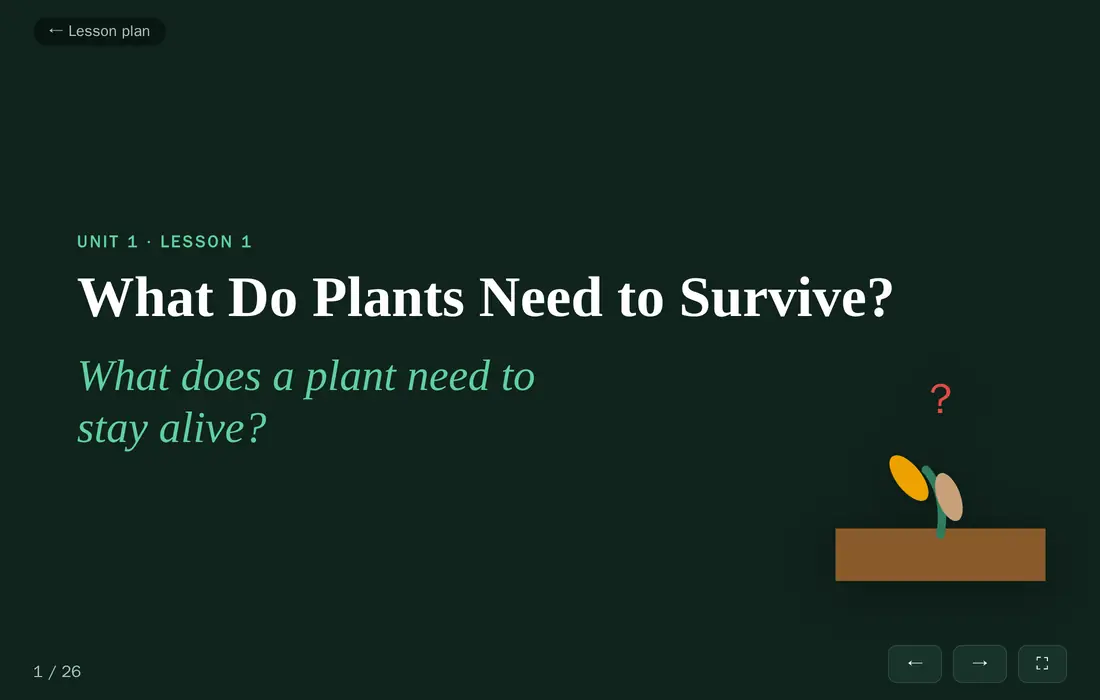
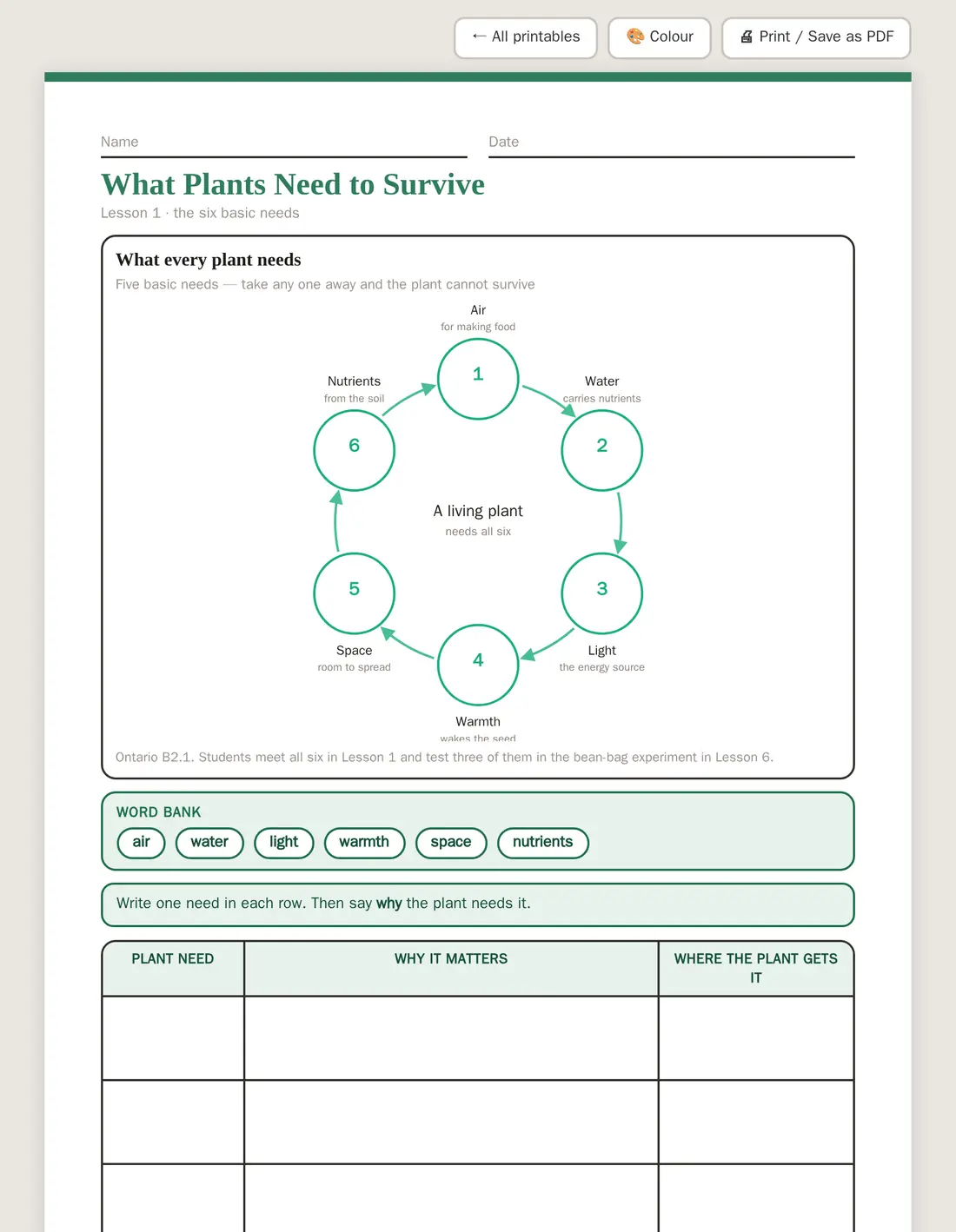
Four units, 366 pages, all produced from one source so that nothing in them can quietly disagree with anything else. Two parts of it are unusual. The slide decks are ordinary web pages rather than presentation files, so a slide is searchable, printable, projectable and accessible like any other page in the unit. And the lesson visuals are drawn to a single specification rather than sourced as photographs, which keeps the visual language consistent across 50 decks, avoids licensing questions, and means a scientific correction is made in one place rather than by hunting for a new image.
Design decisions
Assessment triggers on progress, not on a date
Each of the 16 assessments is released by finishing the lesson before it. The intended behaviour is straightforward: a class that loses a week loses a week, and the assessment plan stays intact behind it. Nothing has to be rescheduled, and a class moving faster or slower than the plan is not penalised by it.
Four instruments per unit, one of each kind
One product, one observation, one conversation and one quiz, so no unit rests its judgement on a single kind of evidence. A child who freezes in a quiz still has three other ways to show what they know, and the teacher has evidence that does not all come from the same task type.
Exemplars at three levels for every assessment
Each assessment ships a page showing what earns the marks, with work at three levels rather than a description of three levels. A rubric tells a teacher what to look for; an exemplar shows them, and it is much harder to disagree with.
A collected-not-graded list
An explicit table of what to look at and deliberately not mark. This is the part meant to reduce marking load, and it can only reduce anything if it is written down and specific — otherwise every artefact stays a candidate for the gradebook.
The curriculum page names its own gaps
Two expectations are declared out of scope, with a note on where they would fit if a teacher wanted to add them. This is uncomfortable to publish and it is exactly why it is published: a coverage claim that has never had a gap is a coverage claim that has never been audited.
Diagrams are drawn, not photographed
The lesson visuals are drawn to a specification rather than sourced as photographs. That keeps the visual language consistent across 50 decks, avoids stock imagery that shows the wrong plant or the wrong apparatus, and makes a scientific correction a change in one place rather than a hunt for a new photograph.
AI’s role
As with everything in this portfolio, the AI is in the making rather than in the product: no page here calls a model, and no student work leaves the device. During the build, AI drafted lesson narration and deck copy against structures that were fixed first, produced first passes at three-level exemplars, and cross-read 366 pages for the kind of inconsistency that survives proofreading. The exemplars are the clearest illustration of the limit — a model writes a very tidy level 2, and a tidy level 2 is the wrong answer.
Human judgment
Three decisions here are judgement and nothing else. Which lesson a given assessment should trigger from, which is a claim about when a child has had enough exposure to be assessed fairly. What a level 2 response actually looks like from an eight-year-old, which has to be recognisably a real child’s work rather than a neat approximation of one. And the decision to name the two out-of-scope expectations — a model asked to summarise coverage will report full coverage, because that is what the material appears to support.
Experience
Open, and linked in full
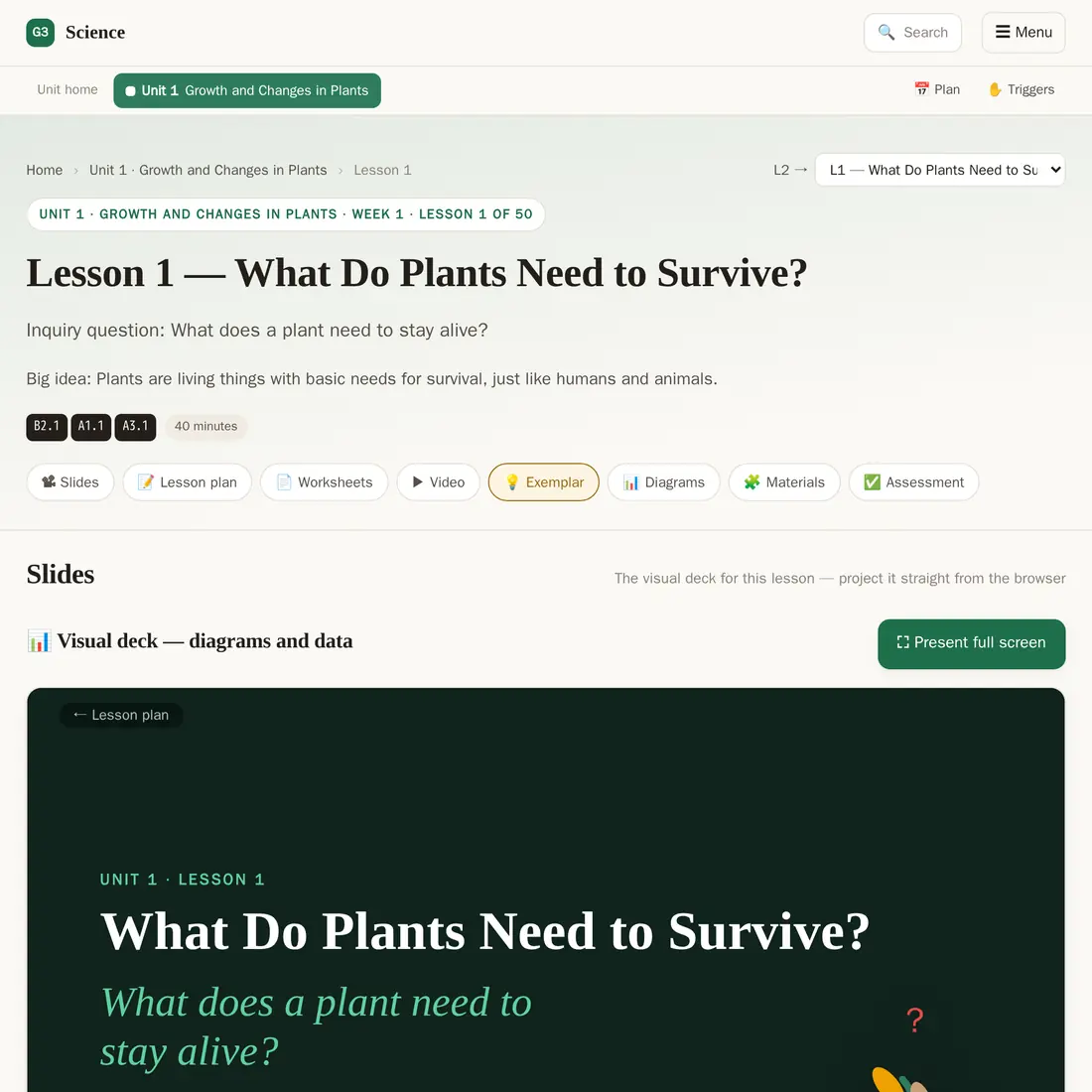
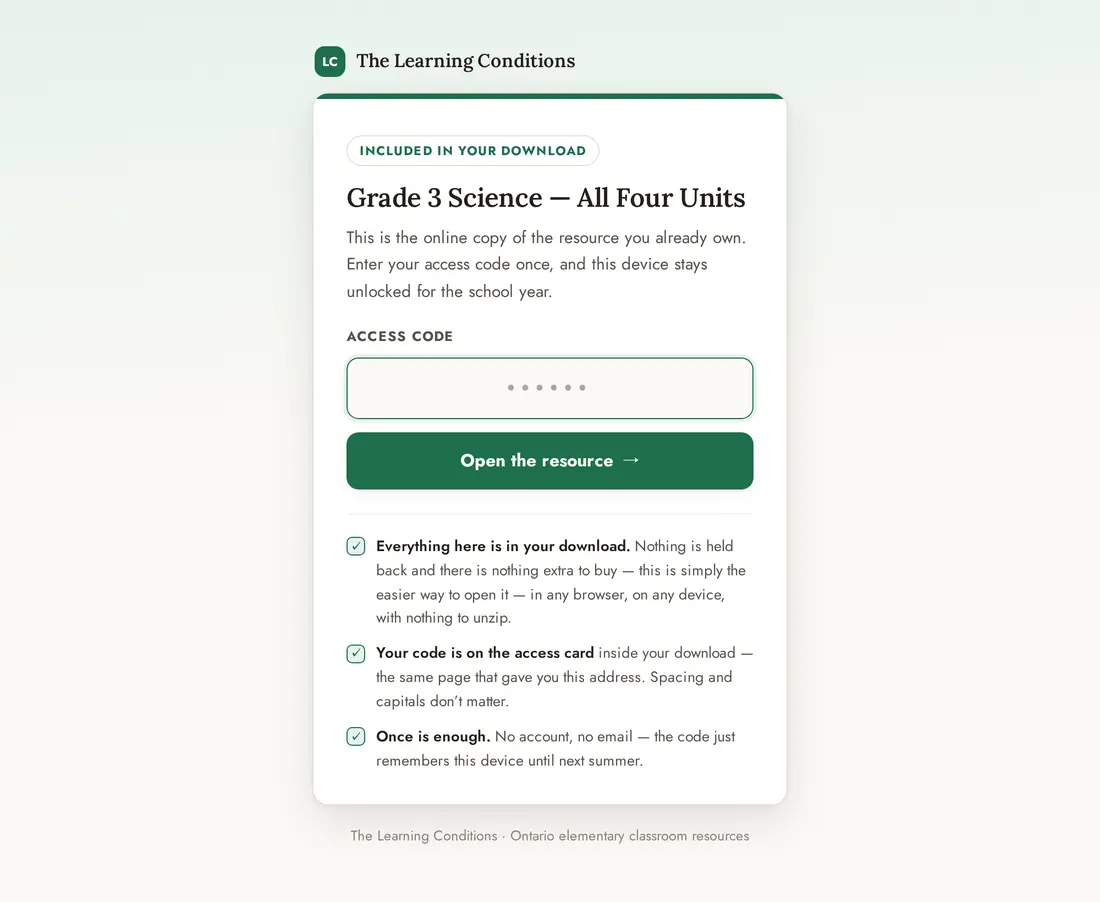
A complete part of this work is published free and open. The link below opens the real thing — not a demo — so the design can be judged rather than taken on description.
https://resources.mamtamotwani.org/free/science-plants/
Challenges
The exemplars were the hardest part of the build and the most consequential. A level 4 exemplar is easy; a believable level 2 is not, because it has to be genuinely partial in the way children are partial rather than simply shorter. And a wrong exemplar is worse than no exemplar, because teachers calibrate against it and will mark a whole class to it. Each one was written to the shape of work children actually produce rather than invented from the descriptor.
Iteration
The visible record of iteration is the coverage audit itself. Mapping every lesson against the strand expectations produced two that the programme touches but does not teach. The available responses were to soften the claim, quietly stretch the mapping, or say so — and the page says so, with a note on where those expectations would fit. That declaration exists because the audit was run honestly, not because the programme was designed with a gap in mind.
Reflection
Unit 1 is free and complete, which is the part of this I am most comfortable with: the whole design can be checked rather than taken on description. What is not here is any evidence about effect. The claim is that this assessment design is defensible and that it survives a disrupted term; it is not a claim that children learn more, because that has not been measured. The trigger model in particular is a design objective with a clear rationale, and it would be straightforward to dress it up as a result. It is not one.
Skills demonstrated
- Assessment system design
- Exemplar writing
- Curriculum coverage auditing
- Ontario science curriculum mapping
- Single-source content design
- Visual and diagram specification
- Instructional writing
Read next
Curriculum
Heritage and Identity
A Grade 2 social studies unit built backward from its culminating task
Interactive Learning
Math at Home
Nine units of Grade 3 mathematics designed for the adult in the room
Adult Learning
The Learning Conditions
A practitioner framework, published as a live site