Curriculum built as software, assessment designed as a system, and the production machinery underneath both. Every project here has a full case study: the problem it was built for, the decisions taken and why, what AI did, what judgment it could not replace, and — stated plainly — what has and has not been measured.
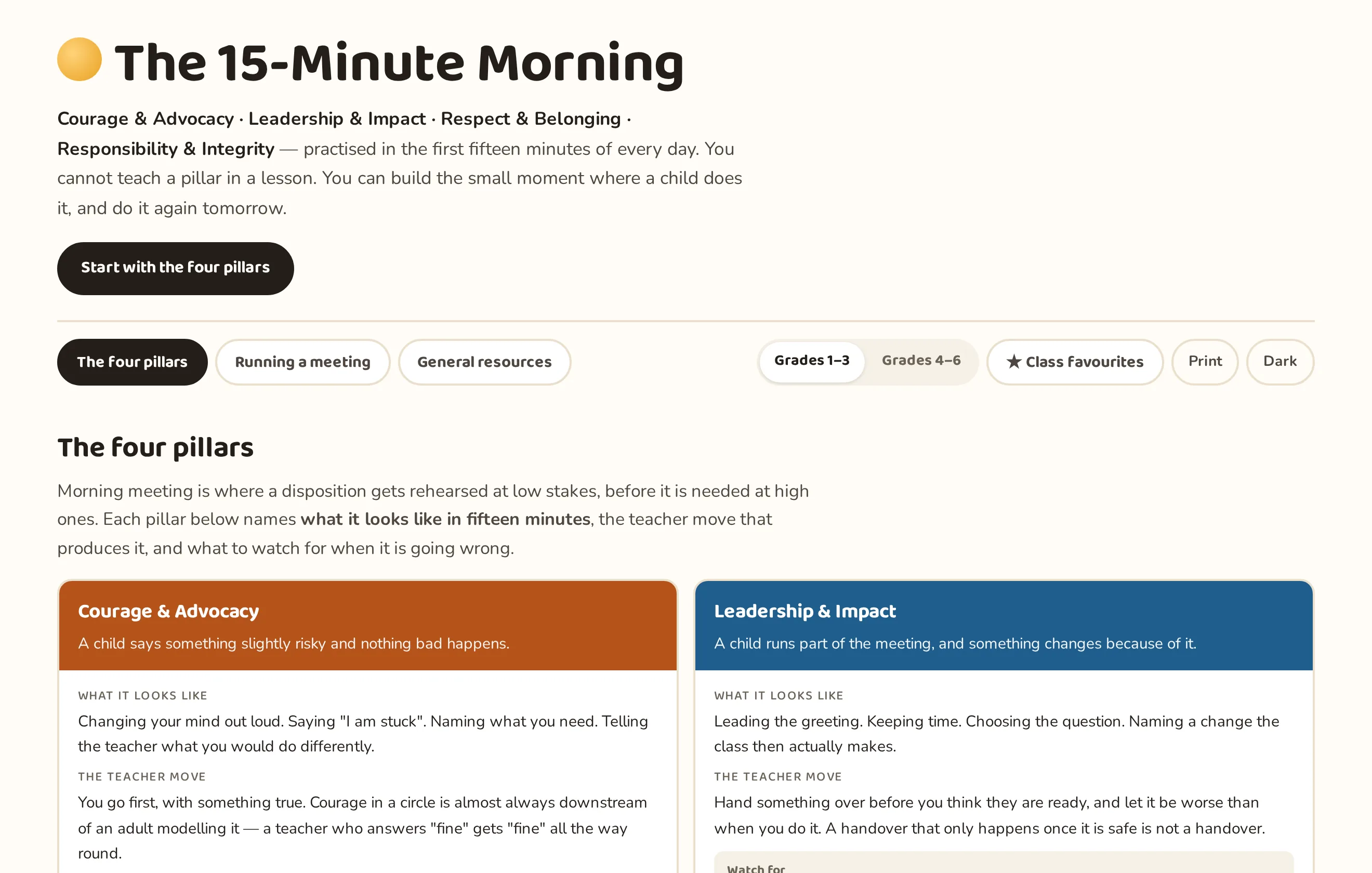
A browsable library of 111 morning meeting activities organised under a school’s four character pillars, built so a teacher can choose at 8:48 and start at 8:50.
Built for
Elementary teachers running a daily morning meeting, Grades 1 to 6
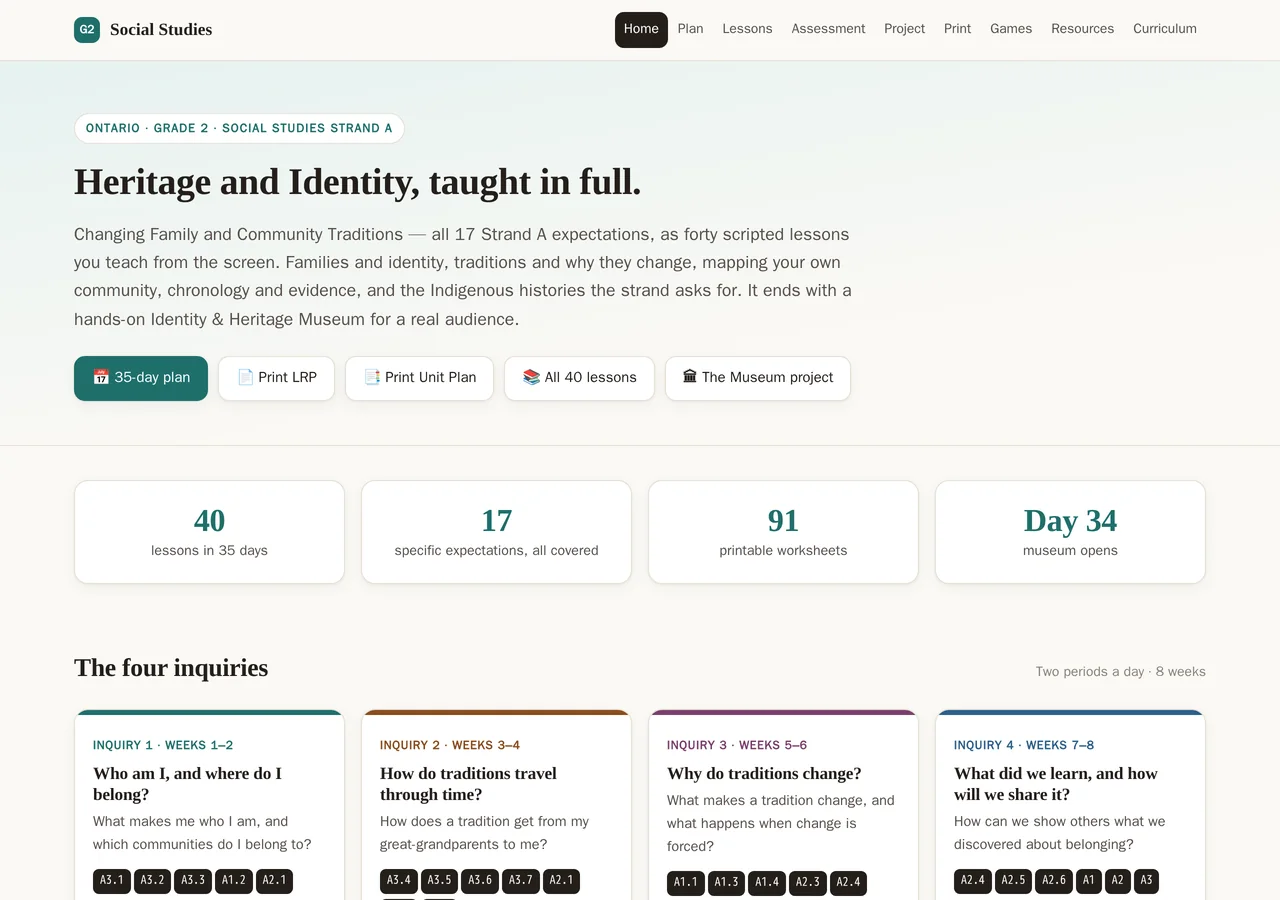
Sixteen assessments across four units, each released when a learner finishes the lesson before it rather than on a fixed date, with three-level exemplars throughout.
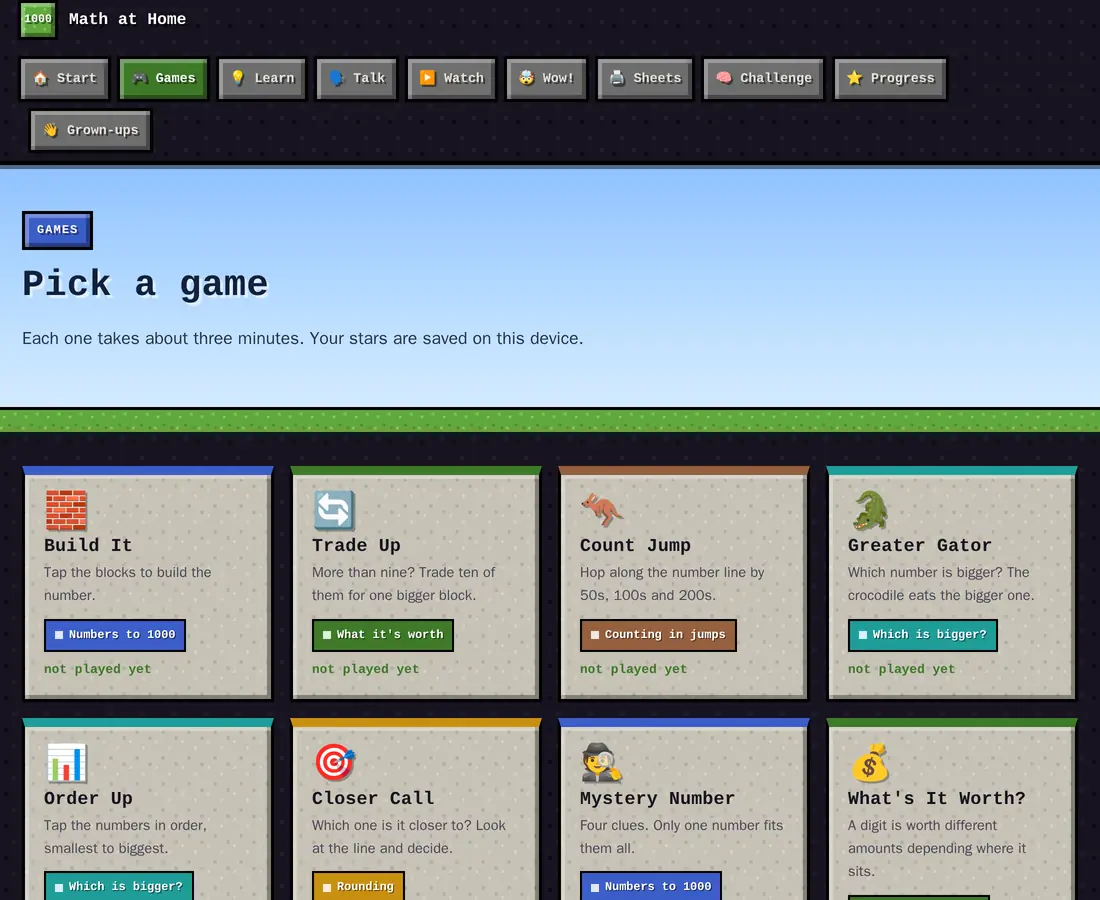
Procedurally generated practice, games that take about three minutes, and a Check instrument deliberately built with no score and one attempt — reporting to the adult rather than ranking the child.
Built for
Parents and carers, and the children they sit with
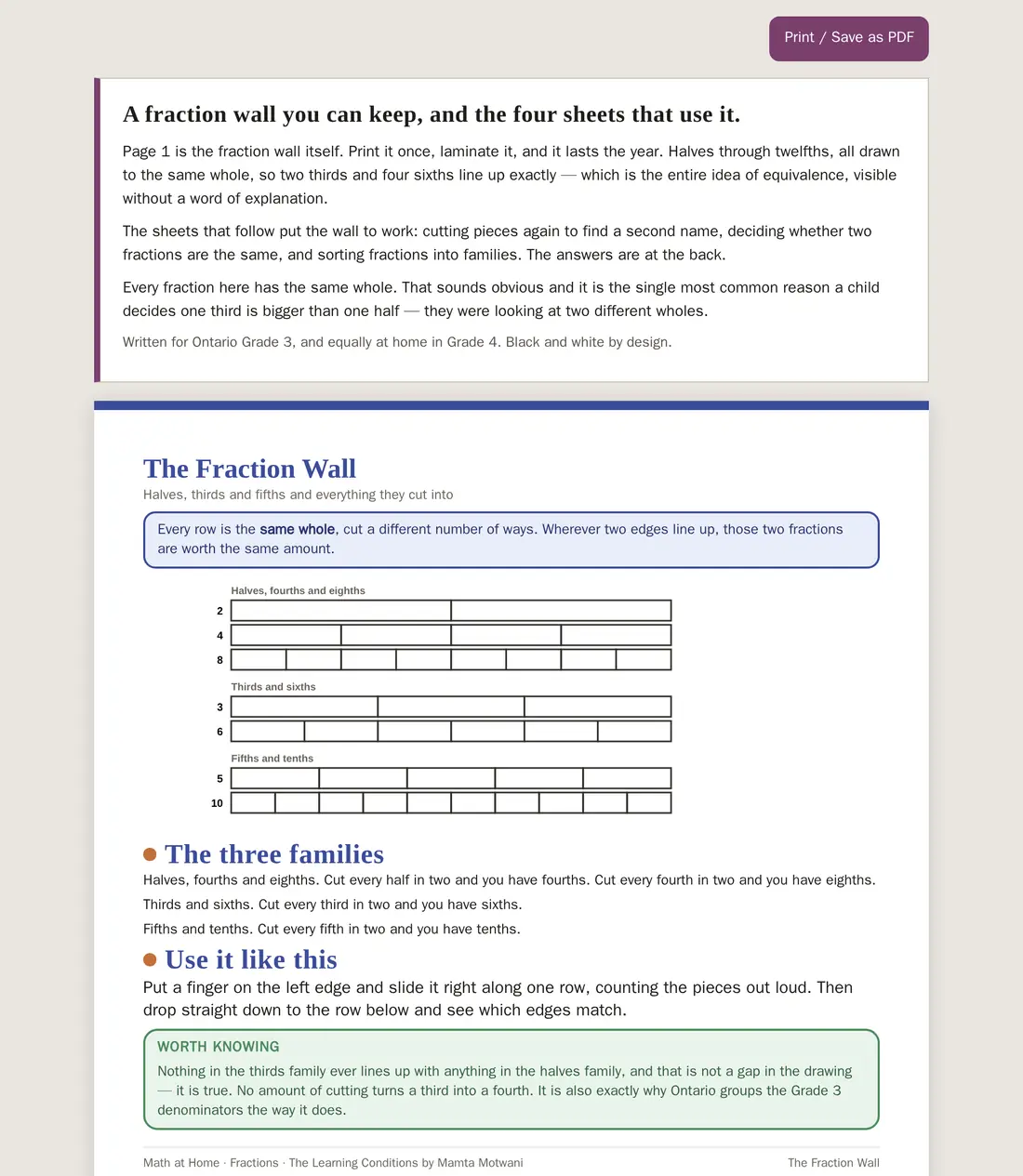
Each is one page that does one thing and explains itself: a fraction wall drawn to a single whole so equivalence is visible without a word, area and perimeter, telling time, the equals sign, graphing, patterns, and challenge tasks.
Sixty-one automated checks that run against the finished pages a child is served rather than the material behind them, including a grade-level ceiling applied to the actual output. Two real defects it caught: a game with a control that play could never reach, and a release that recorded one version of a product while shipping another.
Built for
Internal — the production pipeline behind every product
Four conditions that have to be true before a child learns anything: they can be wrong at no cost, they hold decisions that are genuinely theirs, the adult knows what to say next, and they can start without an adult.
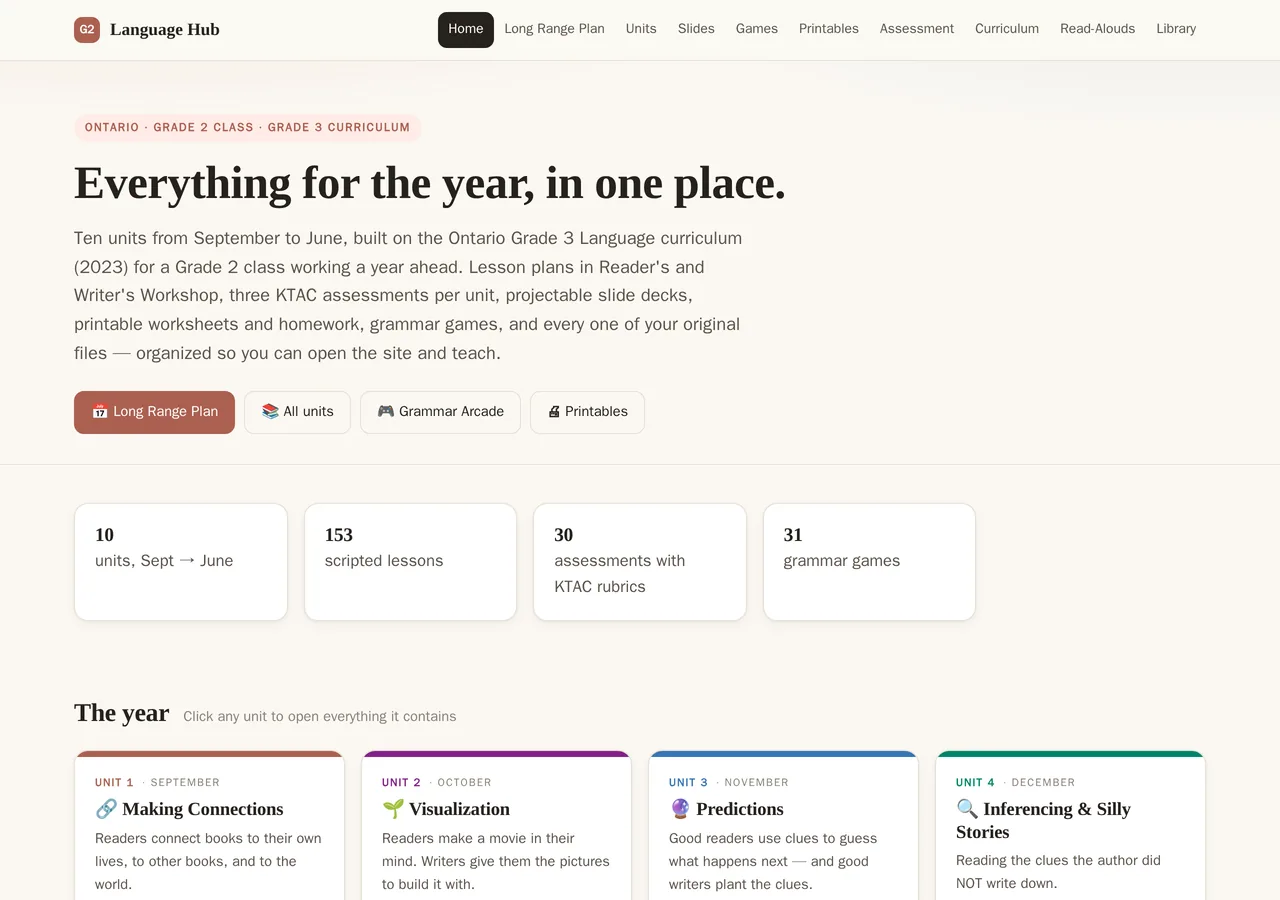
Ten units across the school year, each built around a classroom frame that gives the writing a real audience — a museum, a detective agency, a company of actors — with the grammar taught inside the writing rather than beside it.
Built for
A Grade 2 class working a year ahead, on the Ontario Grade 3 Language curriculum
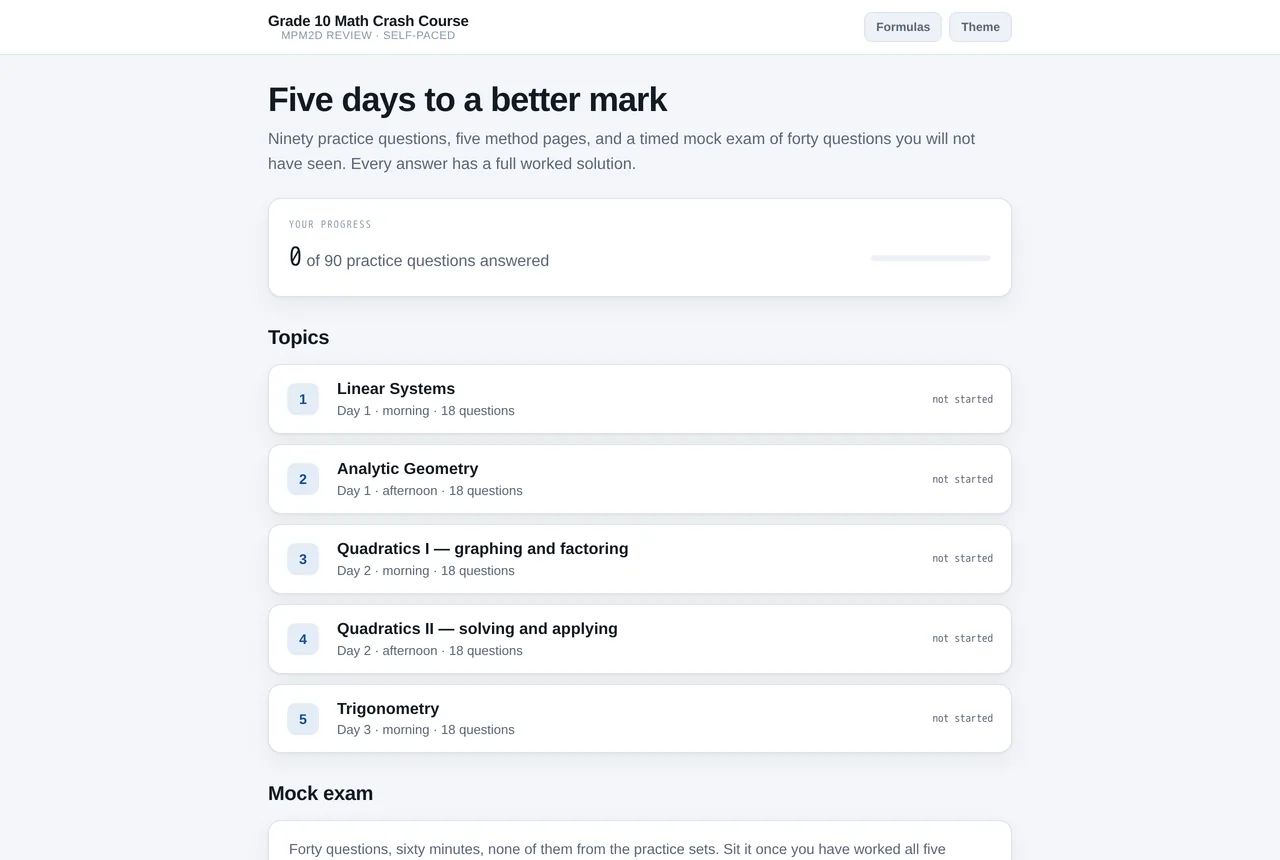
Ninety practice questions across five topics and a timed forty-question mock nobody has seen before, every one worked in full — delivered as a printed workbook and a self-paced site that marks itself and names the topic to go back to.
Built for
Grade 10 Academic students revising for the MPM2D exam, and the teachers handing it to them
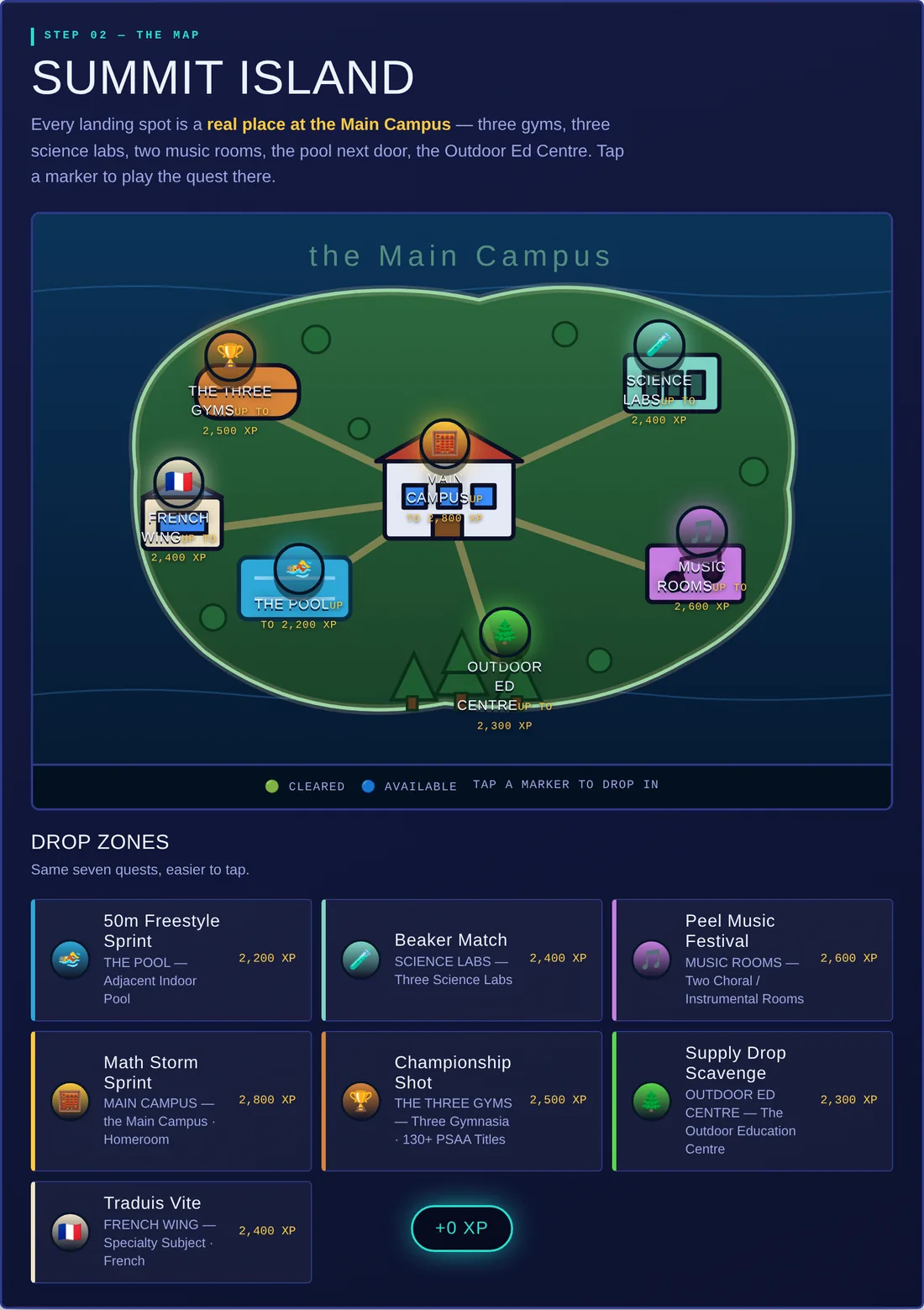
A Battle Pass and an interactive comic, built in the visual language children already read fluently, where the unlockable loot is real information about the school they are about to start at.
Built for
Children aged 10–12 starting at a new school, on the phone in their hand
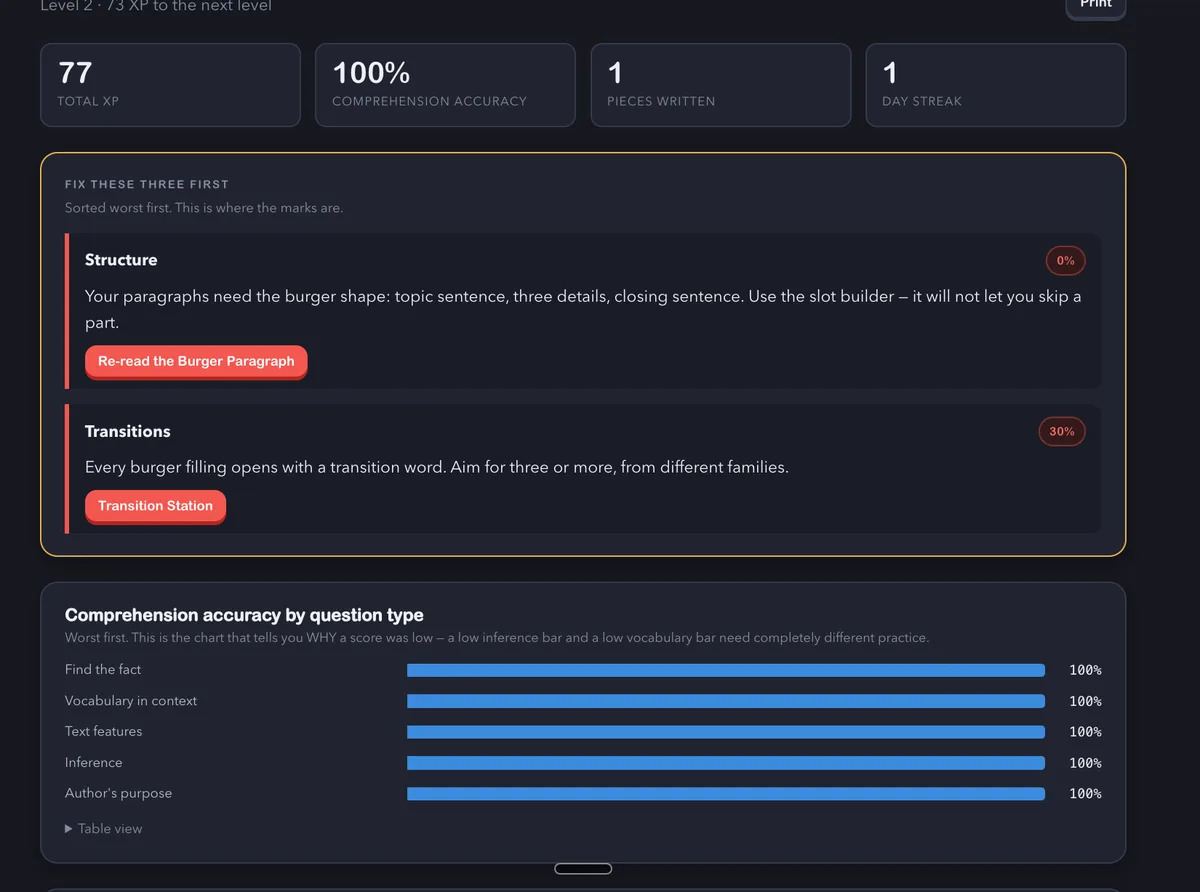
A three-day tutoring site for a handwritten entrance exam — five named routines, original passages with comprehension questions, a drill gym, a print pack because the real test is on paper, and a progress view that says which two things to fix first.
Built for
Children preparing for a written entrance test, and the parent sitting with them
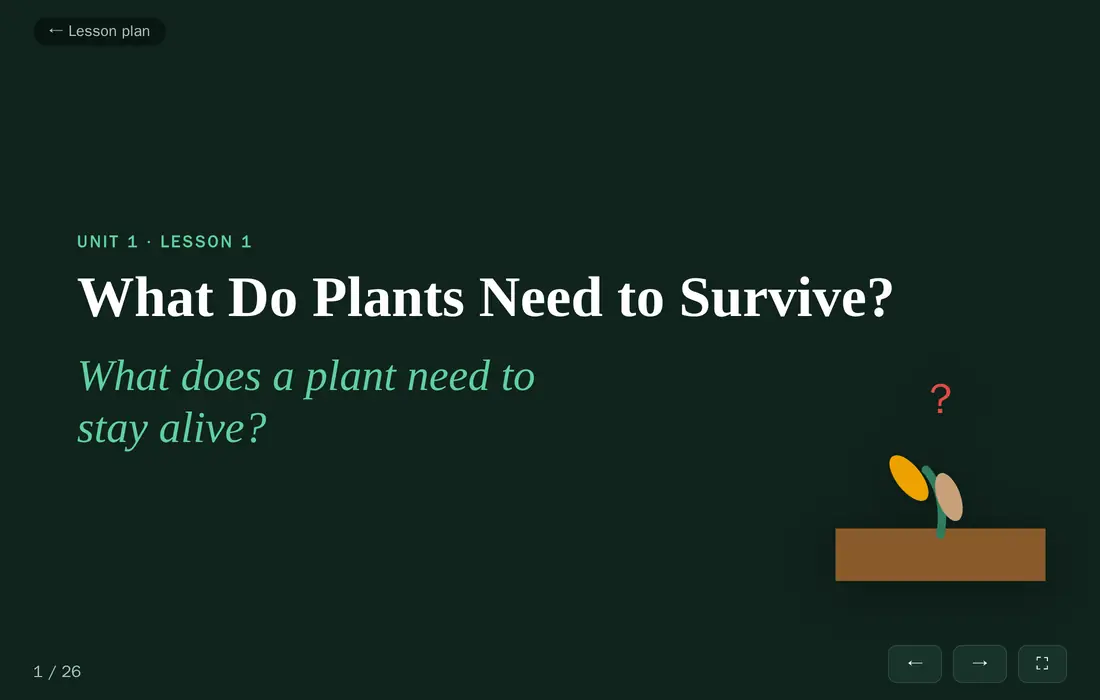
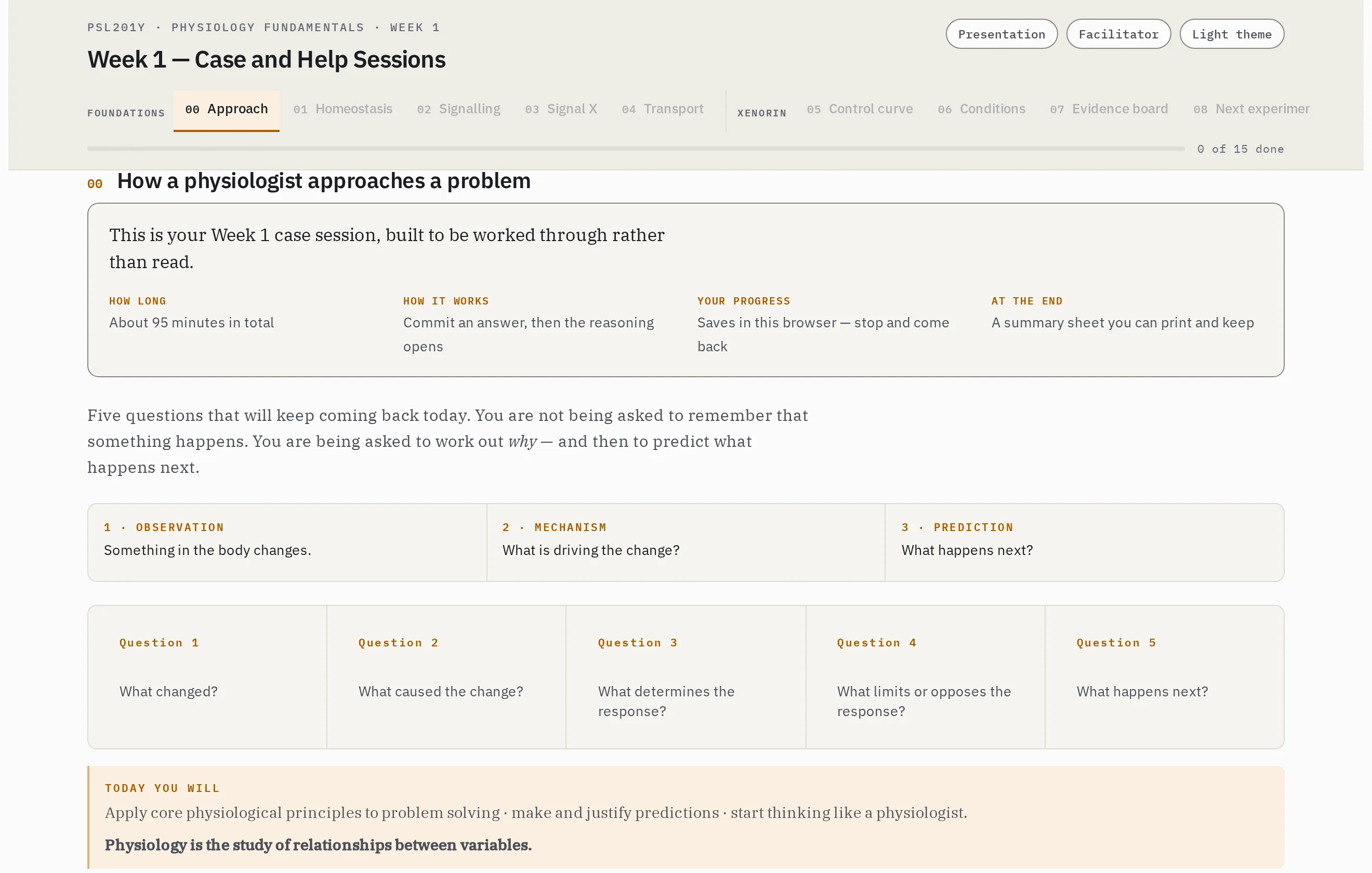
Fifteen staged exercises across five parts, about ninety-five minutes, in which students commit to an answer before the reasoning opens. Built for a university course director from an existing lecture deck.
Built for
Second-year undergraduate physiology students, and the instructor running the session
Read the case study →
The system underneath
Infrastructure rather than a product, but it decides what the products can be — so it gets a case study too.
Twenty-four products opened as a website instead of downloaded as a ZIP, gated where paid. No accounts, no passwords, no email capture, and no per-buyer record stored anywhere — a privacy position taken by design rather than by policy.
Read the case study →
How these are labelled
Every project carries one of four labels, and they mean exactly this. Nothing here was made for a client I invented, and nothing describes a hypothetical engagement as if it happened.
Professional Project
Built as a commercial product, sold and in use by teachers who bought it.
Independent Project
Built on my own initiative, for my own production pipeline or publication. Nobody commissioned it.
Portfolio Concept Project
Built to demonstrate an approach. Real and working, but not sold and not deployed for a client.
Education Project
Built for classroom teaching rather than as a product.