The Purpose of Education: A Reflective Journey in Creating Value and Happiness

I have always found myself reflecting on my educational theory and pedagogy. Not as an abstract exercise, but as a living, evolving process shaped by the children in front of me. Over time, my beliefs about education have shifted from focusing on curriculum and outcomes to something more human — more essential. Listening to the podcast on Soka (value-creative) education by Dr. Paul Sherman prompted me to pause again and reflect more deeply. His perspective resonated with something I have long felt: the purpose of education is to cultivate happiness through value-creation.

Dr. Sherman shared a powerful idea: instead of worrying about crafting the perfect educational philosophy, we should look at the child in front of us and ask ourselves these simple but profound questions:

“What can I do to make sure this child leads a happy life?”

“What can I do to help this child maximize their potential?”

“How can I create an environment that helps this child create value from their learning?”

These questions resonate deeply with me. They shift education from theory to humanity. They ground pedagogy in compassion. They remind me that every decision I make — every lesson, every conversation, every moment — should be guided by the well-being and growth of the child. They remind us that education is not a system first—it is a deeply human encounter between teacher and student.

This perspective aligns deeply with the principles of Soka education developed by Tsunesaburo Makiguchi. Makiguchi believed that the ultimate purpose of education was happiness—not superficial happiness, but the deep, enduring happiness that comes from living a life of value and contribution.

Makiguchi said:

“Our life is an experiment to create the greatest good.”

I find this idea incredibly powerful. If life itself is an experiment in creating the greatest good, then our classrooms should be spaces of experimentation as well—places where students and teachers work together to create value.

Education, then, becomes a shared journey. Teachers guide, nurture, and encourage. Students explore, struggle, and grow. Both are transformed in the process.

Makiguchi also emphasized that human beings have the capacity to create three types of value: beauty, gain, and good.

Beauty refers to the appreciation of aesthetics, creativity, and joy in the world around us. 

Gain relates to personal benefit—growth, knowledge, and the skills needed to live a fulfilling life. 

Good represents the social value we contribute to others and to society.

When I reflect on these three values, I realize how often they appear in our classrooms, sometimes in the smallest moments. A student expressing creativity through writing or art. A child gaining confidence after solving a challenging problem. A group of students supporting one another through collaboration.

These moments remind me that learning is not only academic—it is deeply human.

When I reflect on my classroom, I ask myself:

  • Are students experiencing beauty in learning? 
  • Are they gaining confidence and capability? 
  • Are they developing a sense of responsibility toward others?

If not, then I must rethink my approach.

Daisaku Ikeda deepens this idea further:

“Education is the process of learning how to create value in one’s own life and in the lives of others.”

This concept of value creation has transformed how I see teaching. Learning is no longer just about mastering content. It becomes a journey — one where students learn to transform challenges into opportunities, mistakes into growth, and knowledge into contribution.

Dr. Sherman also speaks about the importance of helping students develop the attitude of never giving up. Winning, in this sense, is not about outperforming others — it is about perseverance. It is about resilience. It is about continuing forward despite obstacles. When students adopt this mindset, they begin to see learning not as a destination, but as a journey.

In my experience, the most meaningful learning happens when students develop the mindset that effort matters, that challenges are opportunities, and that growth is always possible. One of the attitudes I strive to develop in students is the spirit of perseverance—the belief that winning in life does not mean never failing, but never giving up.

Winning, in the deepest sense, means continuing forward with courage.

If education can cultivate this spirit in young people, then we are preparing them not only for academic success, but for life itself.

Another idea from Makiguchi that I find particularly meaningful is that teachers and students must grow together. Growth may not always occur in the same direction—teachers and students bring different experiences, perspectives, and roles—but the classroom should be a space where everyone is evolving.

In this sense, education becomes a dynamic relationship. Teachers are not simply transmitters of knowledge. We are learners alongside our students. Each day offers opportunities to reflect, adjust, and grow.

When I step back and reflect on my own educational journey, I realize that the purpose of education, for me, comes down to three interconnected goals.

First, education should help students discover happiness through meaningful learning and personal growth.

Second, education should empower students to maximize their unique potential.

Third, education should cultivate individuals who contribute to the well-being of others and society.

When these elements come together, learning becomes transformative. Students begin to see themselves not simply as recipients of knowledge, but as creators of value.

And perhaps that is the Heart of Education. This is the Purpose of Education. This is Humanistic Education.

Each classroom becomes a living experiment—an experiment in creating beauty, gain, and good. An experiment in human growth. An experiment in hope.

As educators, we may continue to refine our philosophies, explore new pedagogies, and adapt to changing contexts. But at the core, the guiding question remains beautifully simple as Dr. Sherman says:

What can I do today to help the child in front of me live a happy and meaningful life?

If we begin there, everything else in education begins to make sense. 

In that question, I find my purpose.
Innovations In The Learning Sector

Hi friends, I am back with another educational blog. My previous blog was about my take back from my course, ‘Leaders of Learning’ from HarvardX on identifying your theory of learning. Our learning theory enables us to take a stance of learning and understand what kind of learners and colleagues we want to work with and the learning environment we want to work in. It is then that our leadership as an educator will be most effective.

You can click on the link for a quick recap on the different theories of learning

It is interesting to see the work of Prakash Nair, the President of  Fielding Nair International which is not just an architectural company but also an educational company. He builds schools not based on what schools should look like but what education should look like. His school buildings make sure that a school is a happy place with flexible seating, comfortable furnishing and not plastic or wooden chairs, access to nature to serve the fact if kids look out at nature, their mental faculties become sharper, and tons of daylight. His company makes sure that a school is a place not to accommodate students but a place where learning is accessible.

One of the International schools I worked in was opening up another branch in the same city. The principal invited the teachers to be a part of the design team along with professionals who were going to build it. So the teachers were an integral part in designing this new building. They were there pretty much every step of the way of designing a dream school. It turned out to be a huge success where innovation was invited and applied.

Today’s blog will be about innovations and creativity in the learning sector, a continuation of my take back from the course. Can we remain in our current jobs in the learning sector and bring about innovations in our learning environment? What kind of innovation are we looking at, keeping in mind Clayton Christensen’s distinction between three different types of innovation: Sustaining innovation, Efficiency innovation, and Disruptive innovation.

World and Education are changing at a fast pace that we, as leaders of learning have to adapt and be open to different perspectives. Today, if you are in the learning sector you have no choice but to be innovative to sustain in a turbulent and changing environment where the students in your school are going to be more adept than the adults at capitalizing on the opportunities that are available for learning in the environment.

Most of us work in a hierarchical collective quadrant. We know that what might not change in these schools is the political and social structures that the school sits in. But what could change is the nature and culture of the schools, the nature of learning, and how schools redefine themselves sitting in the hierarchical model of leadership.

          Let us look at some ways in which innovation can be carried out.

1. Optimal learning space created by the learners.

The learning environment plays a huge role as a learning tool. This is only being further confirmed by growing research on the relationship between physical infrastructure and learning based on neuroscience. While it may not be possible, to redesign the entire physical plant, as a teacher, coordinator, or the head of school, it is possible to make the classrooms, libraries, and other facilities more learning-friendly. To begin with, students with the guidance of teachers can be in charge of setting up their optimal learning space. A class discussion led by students and facilitated by the teacher would create a learning space with the necessary must-haves such as peace or calming corner, flexible seating, different types of seating, reading corner, a games section, collaboration space, a space to create displays, independent working area and the layout of the above. I am confident that learners will create a learning environment with more mobility.

2. Reflect on your theory of learning to design a learning environment

Leaders of learning will design a successful learning environment if the environment is built on powerful theories of learning. The leaders must reflect on powerful questions. A leader/teacher/coordinator must ask themselves the reason for choosing a particular grouping plan for children or the reason for different settings of individualized plan. When these answers are translated into a physical design, one will have much powerful results.

3. Transparency amongst adults

A learning environment should be a space where adults learn from each other’s practises. This should be evident to the student learners to teach them a lifelong lesson that learning occurs at every age. Your learning theory should be transparent to the other adults as well as the students because it is like a social contract between you and the learner so there should be nothing mysterious about it.

4. Freedom to access learning

I am currently working as a homeroom teacher in the elementary section of a reputed international school in Mumbai where innovation in learning is invited and appreciated. Being a PYP curriculum, we follow the inquiry cycle and usually have three lines of inquiry. Learners are agentic and we only need to provide opportunities. We do not give agency. While staying in the hierarchical collective set up, I attempted to cross the quadrant and follow my theory of learning of distributed individual mode of leadership. In one of our units, we asked the children to come up with their own line of inquiry and they led their learning.  Our brains are programmed for attention to novelty, change, and curiosity. This takes away the stress from learning and helps learners to get intrinsic gratification to persevere. Needless to say, the attempt was a success.

5. Freedom to choose learning

While it may be difficult to have a personalized learning plan for each child, we could at least give enough choices to the children to choose what interests them. Usually, the curriculum is set by a team of leaders with not much choice given to learners. Access of choice is for their different learning styles. It is time that we give choices to learners about what they want to learn. It may not be possible to have 20 different units running at the same time. But we could surely give them an option of two units at a time to bring about efficiency innovation. For e.g. while doing the theme How The World Works, the learners can be given a choice between Weather and Sound, instead of expecting everyone to enjoy or be interested in one unit. This could be a beginning.\

6. A place for every personality

In Susan Cain’s book, Quiet: The Power of Introverts in a World That Can’t Stop Talking,  extroverts get their energy from social interaction and introverts gain energy from quiet spaces and a time to think and reflect alone. Peer interaction is the key to learning but can drain the introverts with a lack of motivation. So, a classroom with a choice of large groups, small groups, and independent work will make all kinds of learners thrive.

7. Flipped Classroom

As per the Flipped Learning Network, 71% of teachers who flipped their classes not just claimed an improvement in grades, but improved student attitudes.

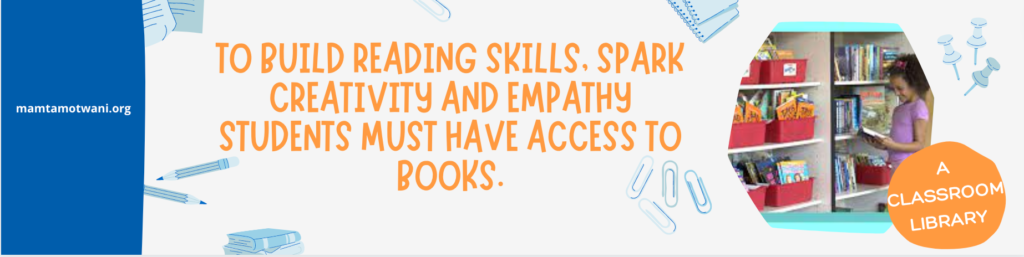
8. A classroom library

Leaners should have easy access to reading. While the classroom library can set up as per the unit being taught, there should be a library in the icommons for every grade on every floor giving your students easy access to an array of interesting books appropriate to their grade level vs a common library for all the students that can be accessed on specific days only.

9. Becoming a learner yourself

It is important we attempt to keep learning something new that we are not comfortable. When we take the position of a struggling learner, it sensitizes us to our students. We need to focus on evaluating our own work instead of judging other teachers. While it is important to build our teacher model based on our mode of learning quadrant, it is important that we remember that at the center lies the learning and not the educational model. Remaining flexible is the key to making learning powerful and being innovative.

10. Every teacher is a leader

Maia Winstock says, “If you’re really passionate about a topic, you end up becoming a leader in it in some way.” It is important that we are involved and regular contributors to the planning process of learning. Entering the classroom and teaching what we are expected to teach is transferred to the students not as learning but as a mundane activity that everyone has to be a part of whether interested or not with no light or fire in their eyes. Leaders of learning need to have focus, compassion, and passion. so, teach something that you are passionate about, teach in a way that serves your purpose. This is the most important thing you will bring to your students.

In conclusion, let us foster the change that we seek.  Leave your ideas of bringing innovation in your learning sector in the comment section and let us help each other in being successful innovators in our learning sectors.

Your Theory of Learning

I recently did a course from HarvardX and decided to share my learnings from it. The future of learners, as well as educators, is about choice. Learners will choose what, how, and where they want to learn. Similarly, we, as educators, will choose what, where and how we want to teach.

Have we wondered as educators what our mode of learning is?

Each one of us falls into a quadrant of learning with our point of view and theory of learning.

Before we move on to the Modes of Learning, let us reflect on what is learning? Does it have a purpose or does it just happen? Is it for a living or for growing? Should learning take place as an act of freedom or an act of compulsion? What kind of learning matters? Should it be assessed or should it give way for other things? The best way to get these answers is to ask the learner.

The different Modes of Learning are Hierarchical Individual, Distributed Individual, Hierarchical Collective, and Distributed Collective.

  1. The Hierarchical Individual Quadrant can be best understood by a traditional school set up with a particular structure and sequence to knowledge. The student’s progress and learning are determined by tests. It is society along with the school that decides what the learner should learn.

2. The Hierarchical Collective Quadrant can be explained by our progressive schools today that do have a particular structure and levels of content, but the difference lies in the purpose of learning. The school is a micro-society within itself. The learners understand their role as citizens of the country and the world, engage in service activities, and develop a world perspective.

3. The Distributed Individual Quadrant states that Individuals are natural learners and decide for themselves what learning is meaningful to them. Learners will want to learn what adds value to them. Individuals are intrinsically motivated to learn some topics and pursue their interests. Mentor expertise, guidance, quality course content, and maximum student engagement are its key characteristics. The learner sets his own goals and determines his success.

4. The Distributed Collective Quadrant is a network of people with common interests and varying degrees of expertise who come together as a community. They choose to join or discontinue their engagement in the learning community as per their needs and flexibility. Learning here is a collective and social endeavor.

The above gist must have enabled you to identify your preferred theory of learning. Moving forward from Modes of learning to Modes of Leadership. As educators, we will have a multitude of opportunities to lead learning. Today, the opportunities for learning and leading learning are exploding. We need to make conscious choices of our career in the learning sector based on our theory of learning. Our learning theory will help us take a stance of learning and understand what kind of learners and colleagues we want to work with and the learning environment we want to work in. Different learning environments require different types of leadership. Your understanding of your theory of learning will help you decide where you fit in the distinction between schooling and learning.

Would you like to work in a stable established well-defined hierarchical organization in collaboration with the coaches, administrators, community members, and the principal?

Or

Would you like to create a structure for learners that enables them to exercise control over their learning?

Or

Would you like to form a social network of learners and inspire individuals with common interests to share the ownership of learning?

One way to answer this question would be to ask yourself the following questions 

  1. Why do you want to teach or lead learning?
  2. How do you like to spend your time?’
  3. How do you define success?

We must have a tight fit between our learning theory and the learning environment we chose to work in. It is then that our leadership as an educator will be most effective.

After identifying my theory of learning, this is a question that I asked myself. Is it possible to remain in a school set up of the Hierarchical Collective Quadrant and yet follow my theory of learning which is of The Distributed Individual Quadrant and bring about innovation in my learning environment?

My next blog will evaluate the different innovations we can bring about in our learning sector.

Leaving you with a thought…Have you identified your theory of learning?